


Introduction: A New Chapter in India’s Space Story
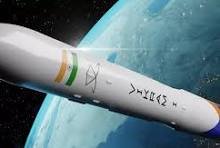
On July 18, 2026, India wrote a historic chapter in its space exploration journey. Vikram-1, the country’s first privately developed orbital-class rocket, lifted off from the Satish Dhawan Space Centre in Sriharikota, marking the dawn of a new era where private companies can independently launch satellites into orbit.
Developed by Skyroot Aerospace, a Hyderabad-based space technology startup, Vikram-1 isn’t just a rocket—it’s a symbol of India’s emergence as a global space hub, combining cutting-edge technology with cost-effective innovation.
In this blog, we dive deep into the science and technology behind Vikram-1, its groundbreaking features, what it accomplished, and why this mission matters for the future of space exploration.
What is Vikram-1? The Basics
Vikram-1 (also spelled Vikram-I) is a four-stage, expendable, small-lift orbital launch vehicle designed to carry small satellites into Low Earth Orbit (LEO) and Sun-Synchronous Orbit (SSO).
Quick Facts
| Parameter | Details |
|---|---|
| Developer | Skyroot Aerospace, Hyderabad |
| Namesake | Dr. Vikram Sarabhai (Father of India’s Space Programme) |
| Height | 20 meters (7 storeys tall) |
| Diameter | 1.7 meters |
| Payload Capacity | Up to 350 kg to LEO (450 km), 260 kg to SSO |
| Thrust | 1,200 kN |
| Stages | 4 (3 solid-fuel + 1 liquid-fuel orbital adjustment module) |
| Structure | All-carbon composite body |
| Maiden Mission | Mission Aagaman (The Arrival), July 18, 2026 |
| Launch Site | Satish Dhawan Space Centre, Sriharikota |
The Science Behind Vikram-1: Propulsion & Stages
Vikram-1 uses a four-stage propulsion system, each designed for a specific phase of the rocket’s ascent to space. This multi-stage approach allows the rocket to shed weight as it climbs, maximizing efficiency.
Stage 1: Solid-Fuel Booster (First Stage)
- Function: Provides the initial powerful thrust to lift the rocket off the launchpad and through the dense lower atmosphere.
- Technology: Uses solid propellant (a mixture of fuel and oxidizer bound together), which is stable, reliable, and generates high thrust quickly.
- Innovation: 3D-printed components reduce weight and manufacturing time.
Stage 2: Solid-Fuel Second Stage
- Function: Continues acceleration after the first stage is jettisoned.
- Operation: Ignites at high altitude where air resistance is lower.
- Guidance: Equipped with indigenous avionics for trajectory control.
Stage 3: Solid-Fuel Third Stage
- Function: Pushes the rocket to near-orbital velocities.
- Separation: Uses ultra-low-shock pneumatic separation systems to minimize disturbance to payloads.
Stage 4: Liquid-Fuel Orbital Adjustment Module (Orbital Stage)
- Function: The most critical stage—fine-tunes the rocket’s trajectory and precisely injects satellites into their intended orbits.
- Fuel Type: Hypergolic liquid propellant (ignites on contact, no ignition system needed).
- Key Feature:Restartable engine allows multiple burns, enabling deployment of satellites into different orbits in a single mission.
Breakthrough Technologies: What Makes Vikram-1 Special?
Skyroot Aerospace packed Vikram-1 with innovative technologies that set it apart from traditional rockets. Here’s what makes it a game-changer:
1. All-Carbon Composite Structure
Unlike conventional metallic rockets, Vikram-1’s body is made entirely from carbon composite materials.
Benefits:
- 50% lighter than aluminum structures
- Higher strength-to-weight ratio
- Better thermal resistance during atmospheric re-entry phases
- Reduced fuel consumption due to lower mass
2. 3D-Printed Rocket Engines
Skyroot uses additive manufacturing (3D printing) to create critical engine components.
Impact:
- 50% weight reduction in engine parts
- 80% faster production time
- Fewer parts = fewer failure points
- Complex geometries impossible with traditional manufacturing
3. Indigenous Guidance, Navigation & Control (GNC) System
Vikram-1 features a fully (indigenous) GNC system that autonomously manages the rocket’s flight path.
Capabilities:
- Real-time trajectory adjustments
- Autonomous stage separation
- Precision orbital insertion (accuracy within meters)
- Adapts to wind shear and atmospheric disturbances
4. Ultra-Low-Shock Separation Systems
Traditional rocket stage separations create violent shocks that can damage sensitive satellites. Vikram-1 uses pneumatic (air-powered) separation instead of explosive bolts.
Result: Safer deployment of delicate payloads, especially important for small satellites and scientific instruments.
5. Multi-Orbit Deployment Capability
Thanks to its restartable liquid upper stage, Vikram-1 can deploy multiple satellites into different orbits during a single launch.
Use Cases:
- Rideshare missions (multiple customers on one rocket)
- Constellation deployment (e.g., satellite networks for communication or Earth observation)
- Cost-effective launches for small satellite operators
Mission Aagaman: Objectives & Achievements
The maiden flight, named Mission Aagaman (The Arrival), was more than just a test—it was a technology demonstration mission designed to validate critical systems.
Primary Objectives
- Collect Real-Time Flight Data that cannot be replicated in ground testing:
- Acoustic vibrations during supersonic ascent
- Thermal conditions across stages
- Stage separation dynamics
- Flight stability and control performance
- Propulsion efficiency in actual flight conditions
- Validate Key Technologies:
- Solid propulsion systems
- Carbon composite structural integrity
- Avionics and telemetry systems
- Guidance, navigation, and control algorithms
- Deploy Technology Demonstration Payloads:
- SCOPE Satellite (Skyroot’s own technology demonstrator)
- Grahaa Space payloads (Indian tech demos)
- Cosmoserve’s “Embrace” payload (robotic capture technology for space debris removal)
- DCubed (German space technology company) payloads
- Symbolic Payloads:
- 18K gold rocket containing micro-sculptures of:
- Sir C.V. Raman (Nobel Laureate)
- Dr. Vikram Sarabhai
- Dr. A.P.J. Abdul Kalam
- Diamond jewelry piece (world’s first diamond to travel to space aboard an Indian private rocket)
- 18K gold rocket containing micro-sculptures of:
Mission Success
According to Skyroot Aerospace, Mission Aagaman successfully deployed all payloads into a 450-km Low Earth Orbit at a 60-degree inclination, while collecting invaluable engineering data to refine future commercial launches.
Why Vikram-1 Matters: The Bigger Picture
1. India’s First Private Orbital Launch
Before Vikram-1, only government agencies like ISRO could launch orbital rockets in India. Skyroot’s success opens the door for private space companies to compete globally.
2. Small Satellite Market Disruption
The global small satellite market is booming (expected to reach $10+ billion by 2030). Vikram-1 targets this niche with:
- Rapid turnaround times (weeks vs. months for traditional rockets)
- Lower costs (competitive pricing for startups and universities)
- Dedicated launches (no waiting for rideshare opportunities)
3. Atmanirbhar Bharat (Self-Reliant India)
Every major component of Vikram-1 is indigenously developed, from engines to avionics to composite materials. This reduces dependency on foreign technology and establishes India as a self-sufficient space power.
4. Global Competitiveness
Skyroot now joins an elite group of private orbital launch providers:
- Rocket Lab (USA/New Zealand) – Electron rocket
- Virgin Orbit (USA/UK) – LauncherOne (now defunct)
- Firefly Aerospace (USA) – Alpha rocket
- ISRO (India) – PSLV, GSLV
Vikram-1 positions India as a cost-effective alternative for small satellite launches, competing directly with established players.
The Future: What’s Next for Skyroot & Vikram-Series?
Mission Aagaman is just the beginning. Skyroot Aerospace has already outlined an ambitious roadmap:
Vikram-2 (In Development)
- Payload: 600+ kg to LEO
- Enhanced propulsion with improved efficiency
- Reusable first stage (vertical landing capability, similar to SpaceX Falcon 9)
Vikram-3 (Concept Phase)
- Payload: 1,000+ kg to LEO
- Medium-lift capability for larger satellites
- Human-rated potential (long-term vision for crewed missions)
Commercial Launch Services
- On-demand launches within 72 hours of booking
- Global customer base (Europe, North America, Asia-Pacific)
- Constellation deployment for satellite internet, Earth observation, and IoT networks
Key Takeaways: Vikram-1 in Numbers
- Mission Name: Aagaman (The Arrival)
- Launch Date: July 18, 2026
- Launch Site: Satish Dhawan Space Centre, Sriharikota
- Orbit Achieved: 450 km LEO at 60° inclination
- Payloads Deployed: 4+ (including SCOPE, Grahaa Space, Cosmoserve, DCubed)
- Technology Milestones Validated: 10+ critical systems
- Historic First: India’s first private orbital rocket launch
Conclusion: A Giant Leap for Private Space in India
Vikram-1 is more than a rocket—it’s a proof of concept that Indian private companies can design, build, and launch orbital vehicles with world-class technology.
From 3D-printed engines to carbon composite bodies, from indigenous GNC systems to multi-orbit deployment, every aspect of Vikram-1 showcases innovation that rivals global leaders.
As Skyroot Aerospace refines its technology and scales up production, the vision of affordable, on-demand space access becomes a reality—not just for India, but for the world.
The message is clear: India’s space future is no longer just government-led. It’s private, it’s innovative, and it’s here to stay. 🚀🇮🇳
About The Author