

JP Nadda in the Headlines: CJP Protests, High‑Level Talks, and the 3 Big Demands
On Monday, July 20, 2026, Union Health and Family Welfare Minister Jagat Prakash (JP) Nadda became the Centre’s key point of contact in the escalating Cockroach Janta Party (CJP) protests in Delhi, as the government opened a formal channel of dialogue with the student and activist-led movement.
What Happened Today?
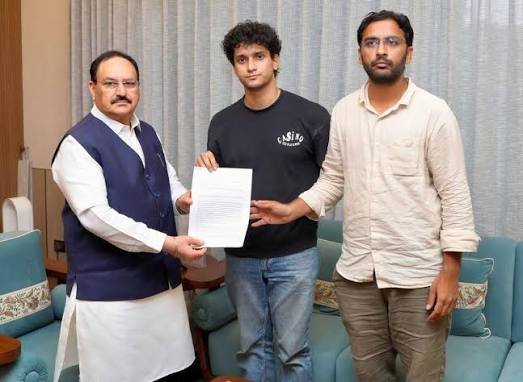
- CJP leaders met JP Nadda at his residence in Delhi after thousands of protesters marched toward Parliament demanding action on competitive exam reforms and related issues.
- CJP spokespersons Saurav Das and Ashutosh Ranka led the delegation and handed over a memorandum listing three core demands to the minister.
- The meeting comes after mass detentions near Parliament and days of protests at Jantar Mantar, with the government now signaling willingness to engage rather than only clamp down.
The 3 Demands CJP Put to JP Nadda
The CJP’s memorandum centers on three high-profile demands:
- Release of Sonam Wangchuk
- The activists sought the immediate release of climate and education activist Sonam Wangchuk, who has been in detention and on hunger strike over exam and policy issues.
- Removal of Education Minister Dharmendra Pradhan
- CJP is demanding the ouster of Union Education Minister Dharmendra Pradhan, holding him politically responsible for the perceived failures and alleged irregularities in national entrance exams.
- ₹1 Crore Compensation for Families of NEET Aspirants Who Died by Suicide
- The group is seeking ₹1 crore compensation for each NEET aspirant who died by suicide, linking these deaths to stress, exam controversies, and systemic issues in the conduct of entrance tests.
These demands frame the protests as not just about one exam, but about broader accountability, mental health, and governance around India’s high-stakes testing system.
Why JP Nadda? The Government’s Choice of Interlocutor
JP Nadda, though primarily the Health Minister, has been positioned as the government’s face in this round of talks for a few strategic reasons:
- Health angle: The demand for compensation for suicide victims and the mental-health fallout from exam pressure fall partly under the health ministry’s domain.
- Political buffer: Using a senior minister who is not directly in charge of education allows the government to listen without immediately conceding on the core administrative responsibility that lies with the Education Ministry.
- Signal of seriousness: Sending a union minister to meet the delegation at his home, rather than a lower-level official, signals that Delhi is treating the agitation as politically significant and potentially volatile.
Reports also indicate that BJP President JP Nadda (the party chief, not the minister) has assured internal discussions within the party after meeting CJP representative Saurav Das, adding another layer to the “Nadda” name in today’s headlines.
Context: Why the CJP Protests Gained Traction
The CJP mobilization builds on months of anger over:
- Alleged irregularities and leaks in national entrance exams like NEET and JEE.
- Rising reports of aspirant suicides, with families and activists blaming extreme pressure and lack of transparency.
- A broader narrative that exam reforms have stalled despite repeated promises, fueling distrust among students and parents.
Sonam Wangchuk’s involvement has amplified the issue nationally, given his profile as an education reform advocate and climate activist, turning a policy grievance into a larger moral and political campaign.
What This Could Mean Next
While the meeting with JP Nadda is a clear de-escalation step, the big questions remain:
- Will the Centre accept any of the three demands, especially the politically sensitive call to remove Dharmendra Pradhan?
- Will there be an independent probe or time-bound roadmap on exam reforms and mental-health support for aspirants?
- Can the government craft a response that addresses student anxieties without appearing to capitulate to street pressure ahead of future elections?
For now, the image dominating the news cycle is clear: CJP leaders walking into JP Nadda’s home with a memorandum, while protests and police action continue around Parliament.
About The Author