

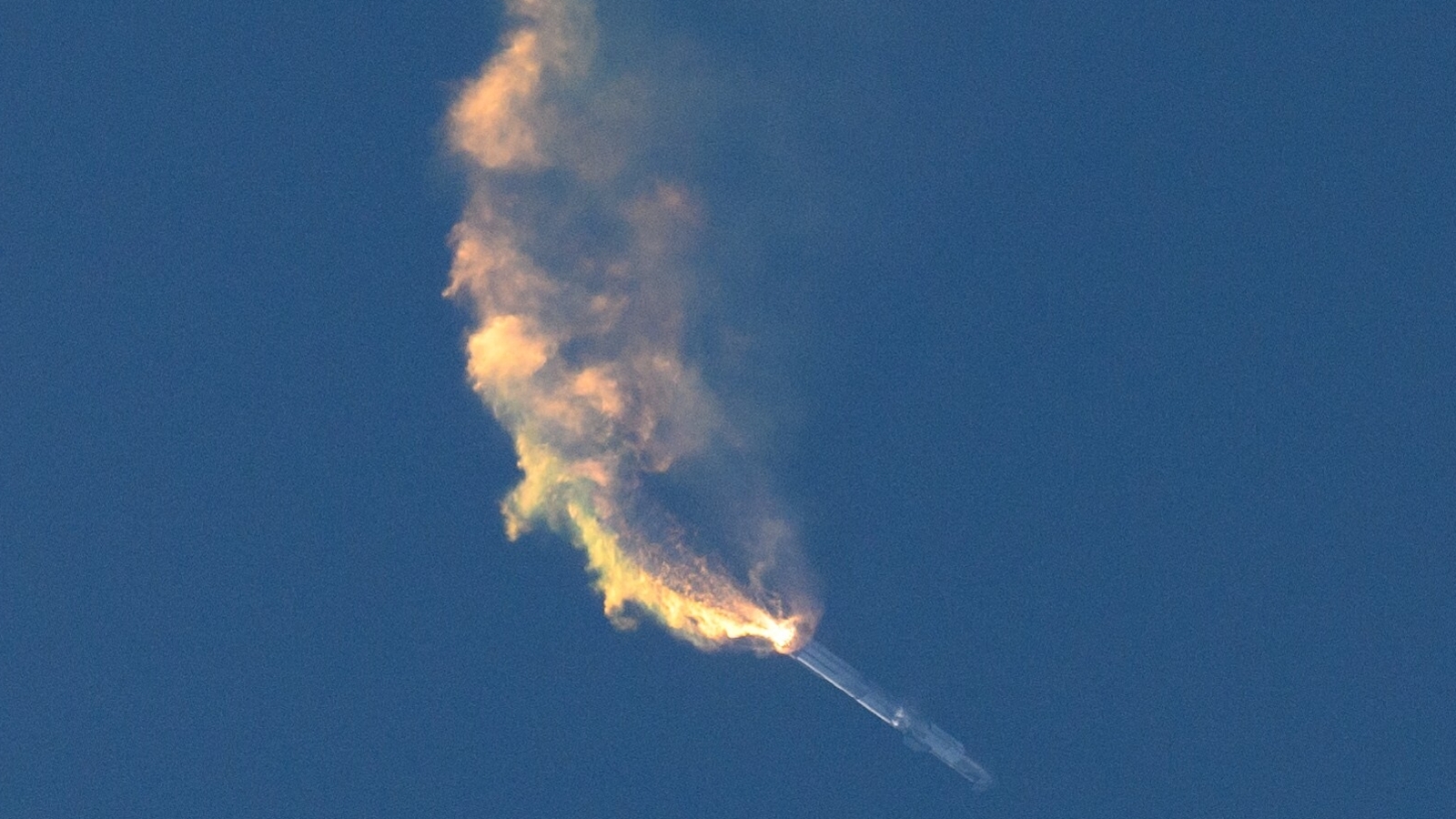
Elon Musk’s SpaceX Starship faced a significant setback during its ninth uncrewed test flight, encountering multiple failures that led to an uncontrolled descent and breakup. This test was crucial for SpaceX’s long-term vision of deep-space missions, including Mars colonization and lunar exploration. However, several technical issues prevented the mission from achieving its objectives.
Key Issues That Led to Failure
1. Super Heavy Booster Failure
The Super Heavy booster, which was supposed to execute a controlled splashdown, lost contact with SpaceX controllers during its descent. This booster is a vital component of the Starship system, designed for reusability to make space travel more cost-effective. Instead of landing as planned, the booster plunged into the sea, making recovery impossible. This failure raises concerns about SpaceX’s ability to reuse boosters efficiently, a key factor in reducing launch costs.
2. Payload Door Malfunction
The upper-stage Starship continued its flight, reaching its planned suborbital trajectory about nine minutes after launch. One of the primary objectives of this test was to deploy mock satellites using Starship’s payload doors. Unfortunately, the doors failed to open, preventing the release of the simulated satellites. This malfunction is a serious issue because Starship is expected to serve as a cargo transport vehicle for future missions, including NASA’s Artemis program.
3. Loss of Attitude Control During Reentry
About 30 minutes into the flight, SpaceX lost attitude control over Starship, causing the spacecraft to spin uncontrollably as it approached atmospheric re-entry. This loss of control meant that the vehicle could not align properly for a safe descent, leading to an uncontrolled landing instead of the planned splashdown in the Indian Ocean. A SpaceX commentator acknowledged during the livestream that the chances of a successful landing were “pretty slim”.
4. Heat Shield and Structural Integrity Concerns
Starship’s heat shield was expected to undergo rigorous testing during reentry, but due to the uncontrolled descent, the spacecraft broke apart before meaningful data could be collected. This is a significant issue because the heat shield is critical for future crewed missions, including NASA’s Artemis program, which aims to land astronauts on the Moon using Starship.
SpaceX’s Response and Future Plans
Despite the failure, SpaceX remains optimistic, viewing the test as a learning opportunity. The company has stated that it will analyze flight data to improve future launches. Elon Musk emphasized that while the mission did not achieve all its objectives, it still provided valuable insights into Starship’s performance.
SpaceX plans to accelerate its testing schedule, with Musk promising more frequent launches in the coming months. The company aims to refine booster recovery, payload deployment, and reentry stability before attempting crewed missions.
Impact on SpaceX’s Long-Term Goals
This failure raises questions about SpaceX’s timeline for Mars missions, as Starship is central to Musk’s vision of interplanetary travel. While setbacks are expected in experimental spaceflight, repeated failures could delay NASA’s reliance on Starship for lunar missions and push back Mars colonization efforts.