

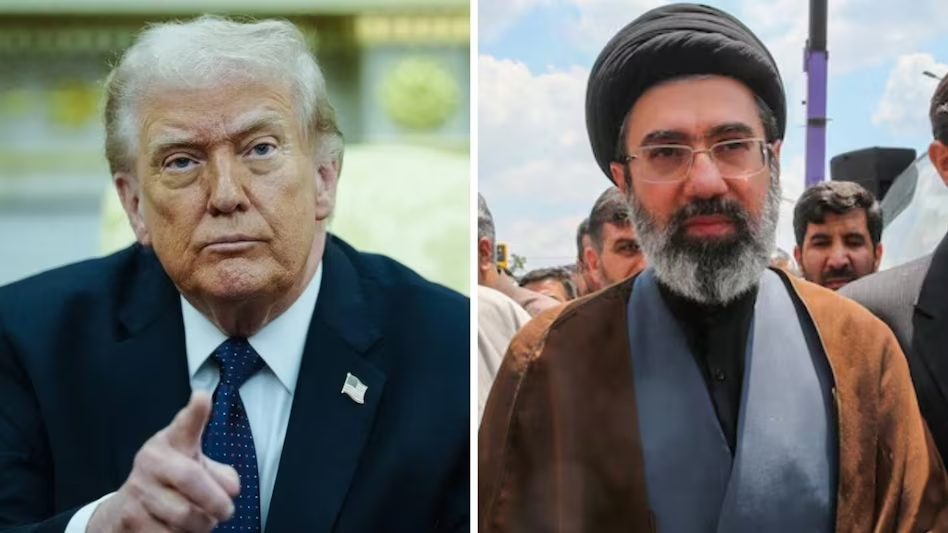
The world is watching. The Strait of Hormuz—the narrow, oil‑rich waterway that carries about a fifth of the globe’s daily oil supply—is once again at the center of a dangerous standoff between Washington and Tehran. And on July 22, President Donald Trump turned up the heat with a stark, specific threat: for every ship Iran attacks in the strait, the U.S. will bomb and destroy one Iranian bridge or power plant.
What Trump Said
In a post on his Truth Social platform, Trump laid out his terms in unmistakable language:
“From this point forward, any time the Islamic Republic of Iran shoots at a ship in the Strait of Hormuz, whether it be by Missile, Rocket, Drone, or any other device or weapon, the United States will bomb and destroy ONE BRIDGE OR POWER PLANT, including those located next to, or in, the Capital City of Tehran.”
He framed the warning as a direct, tit‑for‑tat response: one attack on a ship = one piece of Iranian infrastructure gone. And he made it clear that targets could include critical assets near or inside Tehran itself.
Why Hormuz Matters
The Strait of Hormuz is more than a map line. It’s a global choke point:
- Roughly 20% of the world’s oil passes through this narrow channel between Iran and Oman.
- Any sustained disruption can send oil prices soaring, hitting economies from New Delhi to New York.
- Commercial shipping, energy security, and regional stability all hinge on this waterway staying open.
For years, Iran has held leverage here—able to threaten mines, drones, missiles, and fast boats. For the U.S. and its allies, keeping the strait open is a red‑line issue.
The Context: A Long, Escalating Shadow War
This isn’t the first time Trump has threatened Iranian infrastructure. Over the past few months, the rhetoric has grown harsher:
- In March 2026, he warned he would “obliterate” Iran’s power plants if the strait wasn’t fully reopened.
- In April 2026, he posted an expletive‑laden Easter message, demanding the strait be reopened by a Tuesday deadline or face “Bridge and Power Plant Day.”
- Iranian officials, including the Revolutionary Guards, have repeatedly warned that any attack on civilian energy infrastructure will trigger retaliatory strikes on U.S.‑linked energy sites in the region.
Now, with U.S. Central Command reporting an 11th straight night of strikes on Iranian military targets—operations centers, drone storage, logistics hubs—the stakes feel higher than ever.
Diplomacy on the Edge
U.S. Secretary of State Marco Rubio, speaking at the ASEAN Foreign Ministers’ meeting in the Philippines, said Washington remains “committed to diplomacy”—but added a familiar caveat:
“If they’re serious, we’re serious. If they’re not, then we will do what is necessary to protect our interest and also the interest of our allies.”
He accused Iran of failing to honor a prior understanding on Hormuz and warned that allowing any nation to control an international waterway, charge tolls, and attack ships would set a dangerous precedent far beyond the Middle East.
Iran, for its part, insists it has the right to secure its waters and has previously threatened to completely close the strait if U.S. strikes hit Iranian energy infrastructure.
What This Means for Ordinary People
This isn’t just about missiles and bridges. It’s about:
- Fuel prices: Every escalation risks pushing petrol and diesel costs higher, from Delhi to Detroit.
- Regional security: More strikes, more retaliation, more chance of a wider war.
- Global trade: Shipping delays, insurance spikes, and supply chain jitters ripple through the economy.
For countries like India, which import a large share of their oil, any prolonged disruption in Hormuz hits household budgets, inflation, and growth.
The Human Cost Behind the Headlines
Behind every policy statement are real lives:
- Iranian families who depend on power plants and bridges for electricity, work, and connection.
- U.S. service members stationed in the Gulf, already mourning losses from Iranian assaults on American bases.abc
- Sailors, traders, and workers whose livelihoods depend on safe passage through one of the world’s most vital shipping lanes.
Threats like Trump’s are meant to deter—but they also raise the risk of a spiral where civilian infrastructure becomes a bargaining chip, and the line between military and civilian targets blurs.
What to Watch Next
In the coming days, keep an eye on:
- Any new attacks on commercial ships in or near the Strait of Hormuz.
- U.S. strike patterns: Are they expanding beyond military sites to include bridges or power plants?
- Iranian responses: Rhetoric, cyberattacks, proxy actions, or direct strikes on U.S.‑linked targets.
- Oil markets: Even the hint of disruption can move prices fast.
- Diplomatic moves: Behind‑the‑scenes talks, UN statements, or regional mediation efforts.
Final Thought: Words That Could Light a Fuse
Trump’s latest warning is clear, blunt, and designed to be felt in Tehran’s corridors of power. But in a region already on edge, every threat is also a trigger. One miscalculation, one misread signal, and a cycle of “bridge for ship, plant for drone” could quickly become something far larger.
For now, the world waits—and watches the strait.
About The Author