



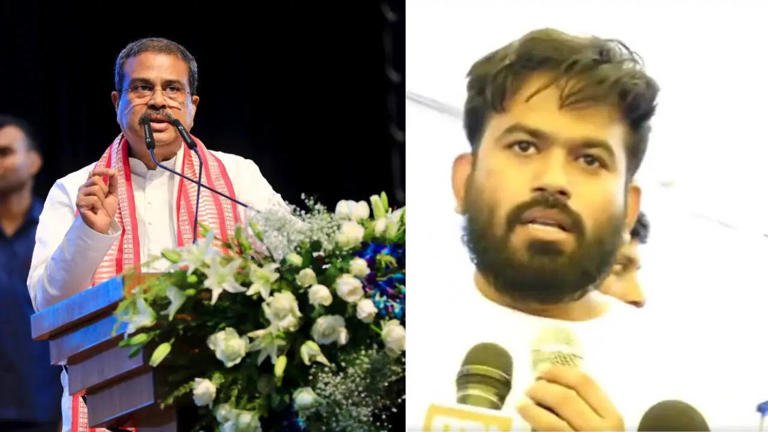
After Union Education Minister Dharmendra Pradhan resigned, the Cockroach Janta Party (CJP) posted an updated list of its “pending” demands on X, making it clear that the protest movement is far from over. The party said that while its primary demand had been met, several other issues remain unresolved, including compensation for affected families, protection for student protesters, and a public apology from the authorities.
The post quickly drew attention because it shifted the story from a single resignation to a wider debate about accountability, justice, and student safety. For the CJP and the protesters it supports, Pradhan’s resignation is not the end of the fight, but only one part of a larger demand for reform and responsibility.
What the CJP Posted
Following the resignation, CJP shared an updated demand list on X, marking “Dharmendra Pradhan must resign” as already fulfilled while keeping the rest of its demands active. According to reports, the party said that three main issues were still pending, including ₹1 crore compensation for the families of students who died by suicide, no action against peaceful protesters, and a public apology from the Rapid Action Force and Delhi Police.
The message was framed as a response to what the party sees as incomplete government action. CJP’s tone suggested that the resignation alone would not satisfy the protest movement unless the government also addressed the human cost of the crisis and the alleged treatment of student demonstrators. In short, the post made it clear that the resignation was viewed as only one milestone in a much broader campaign.
Why the Demands Matter
The updated list matters because it shows that the controversy is no longer just about one minister. It is now centered on whether the government will acknowledge the suffering of students and families affected by the exam crisis. For the protesters, compensation, protection from legal action, and a public apology are not symbolic extras; they are essential parts of accountability.
The compensation demand is especially significant because it connects the protest movement to the emotional and financial impact of the paper leak controversy. CJP has argued that families affected by the crisis deserve concrete relief, not just promises of reform. That framing gives the protest a human dimension and helps explain why the movement has continued even after the resignation.
The Role of X in the Protest
The CJP’s decision to post the updated list on X reflects how central social media has become in modern protest politics. Instead of waiting for formal press statements alone, the party used X to directly communicate its message to supporters, opponents, and the public. That approach helps the protest remain visible and keeps pressure on the government in real time.
It also allows the movement to control the narrative. By listing the demands in a clear, bullet-point style, the CJP made sure the public could quickly see what it believes has been resolved and what still needs action. In a fast-moving political story, that kind of direct communication can shape public perception more effectively than a long press conference.
Protesters Say Movement Will Continue
Reports suggest the CJP and student groups are not planning to stand down yet. Even after Pradhan’s resignation, the party said protests at Jantar Mantar and elsewhere would continue until all demands are met. That includes both the compensation issue and the demand that no punitive action be taken against peaceful student protesters.
This is important because it shows the movement has evolved beyond a single resignation demand. The protest now has a wider set of political and moral goals, including justice for affected families, institutional reform, and protection for those who spoke out. As long as those issues remain unresolved, the agitation is likely to stay in the headlines.
Government Pressure Grows
The updated demand list also increases pressure on the government to respond with more than a symbolic concession. Pradhan’s resignation may have reduced immediate public anger, but the CJP’s new post shows that many protesters believe the crisis is deeper than a single political exit. If the government ignores the remaining demands, the protest could intensify again.
That leaves the Centre in a difficult position. It must balance law and order concerns, public sympathy for students, and the need to avoid appearing weak or dismissive. The next steps will likely determine whether the resignation becomes a turning point or just another chapter in a long-running education controversy.
Public Reaction
The public response has been mixed but intense. Supporters of the protests see the CJP’s post as proof that the movement is organized and focused on justice, not just political confrontation. Others may view the continued demands as a sign that the protest leaders are not ready to accept partial concessions.
For readers and observers, the key question is whether the remaining demands are reasonable and achievable. Compensation, apology, and non-action against peaceful protesters are all issues that often appear in movements centered on student rights and institutional accountability. Whether the government responds positively could determine the tone of the national conversation in the days ahead.
Conclusion
Dharmendra Pradhan’s resignation has not ended the protest story. Instead, it has opened a new phase in which the CJP is pushing the government to address the deeper consequences of the exam crisis. With its updated X post, the party has made one thing clear: the fight will continue until the remaining demands are me
About The Author


