


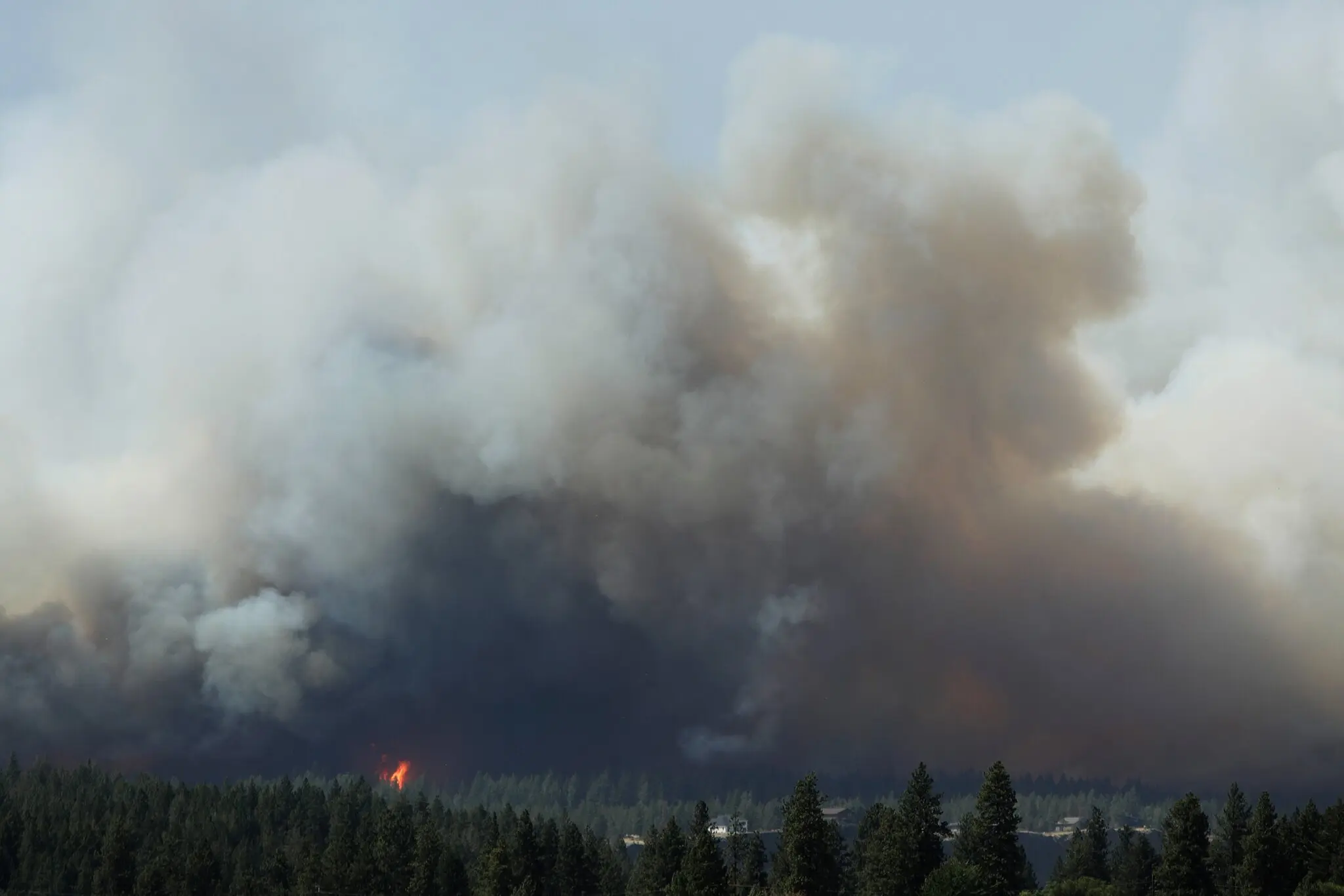
A fast-moving wildfire near Spokane Valley forced evacuations, threatened homes, and prompted a large emergency response from local and regional crews. The blaze, known as the Upriver Fire, burned in the Camp Sekani and Upriver Drive area and quickly became a serious public safety concern for residents east of Spokane.
What began as a dangerous brush fire soon escalated into a major wildfire incident, with officials ordering some neighborhoods to leave immediately while others were told to be ready to go at a moment’s notice. The fire spread through dry terrain, and fire crews had to work under difficult conditions as winds and heat pushed flames closer to homes.
What Happened Near Spokane Valley
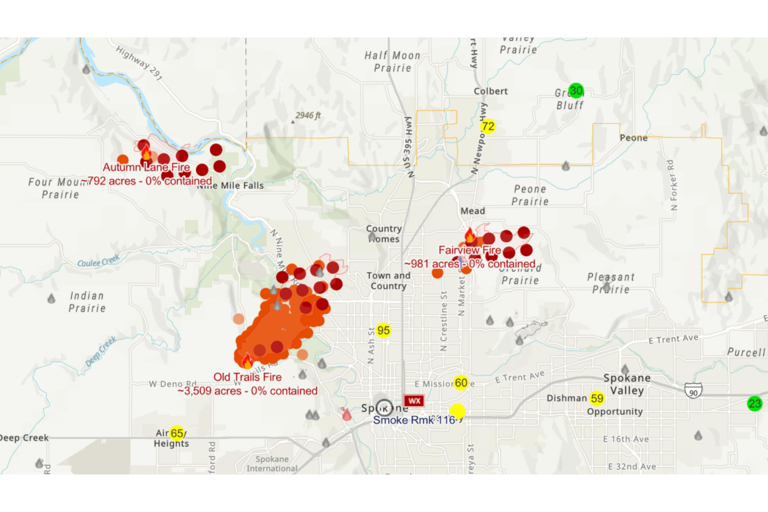
The Upriver Fire grew rapidly in the area east of Spokane, forcing firefighters to respond with ground crews, engines, and aircraft. Early reports showed the blaze burning across more than 200 acres, with later updates indicating further growth as emergency crews fought to contain it. The situation became urgent enough that evacuation orders were issued across a broad section of the affected area.
Spokane Valley Fire said its crews were assisting with the wildfire in a neighboring jurisdiction near the Upriver Drive corridor. As the fire intensified, multiple agencies joined the response, working together to stop the flames from spreading into more neighborhoods. The scale of the effort reflected how quickly a wildfire can move from a local emergency to a regional crisis.
Evacuations and Community Impact
Officials issued Level 3 “Go Now” orders for some residents, while other areas were placed under Level 2 evacuation warnings. Reports said nearly 12,000 people were affected by evacuation alerts at the height of the fire. Roads in and around the affected neighborhoods became busy with emergency vehicles and residents leaving their homes under pressure.
The emotional toll on the community was significant. Families were forced to leave belongings behind and make quick decisions about where to go and how long they might be away. For many, the fire was a reminder that wildfire threats are no longer limited to remote forests but can reach suburban and residential areas with little warning.
Damage reports added to the seriousness of the incident. At least 15 homes were damaged or destroyed, and one death was reported in connection with the fire. Additional coverage noted that several homes were lost and that crews were still assessing the full extent of the destruction. For local residents, the fire represented not just a news event but a personal tragedy that affected neighbors, families, and entire streets.
Emergency Response Efforts
Firefighters used a coordinated attack to slow the blaze and protect structures. Aircraft helped drop water and retardant, while ground crews worked to establish control lines and defend homes. Officials asked the public to stay out of the area so aircraft could safely operate, and crews could move without obstruction.
Over time, updates showed progress as containment improved. Even so, crews remained on alert for hot spots, flare-ups, and changing wind conditions that could reignite the danger. Wildfires often require continuous monitoring long after the first flames are knocked down, and that was clearly the case here.
The response also highlighted the value of communication between agencies and the public. Fire departments, emergency officials, and local media worked to keep residents informed about changing evacuation zones and safety instructions. In a fast-moving fire, timely information can make the difference between safety and disaster.
Why This Fire Matters
The Spokane Valley fire is a powerful reminder of how vulnerable communities can be during wildfire season. A fire that starts in wildland or brush can quickly move into populated areas, threatening lives and forcing entire neighborhoods to evacuate. That reality has become increasingly familiar in many parts of the West, where dry conditions and heat can turn small ignitions into major emergencies.
It also shows how much preparation matters. Residents who understand evacuation levels, keep emergency supplies ready, and stay alert to official warnings are more likely to respond quickly when danger appears. For those affected by the Upriver Fire, the experience was a sobering lesson in how fast circumstances can change.
As the fire moved toward containment, the community began the long process of recovery and assessment. Some residents returned home, while others faced the loss of property or the uncertainty that comes after a major wildfire. The event will likely be remembered as one of the most serious fire emergencies to hit the Spokane Valley area in recent memory.
About The Author