



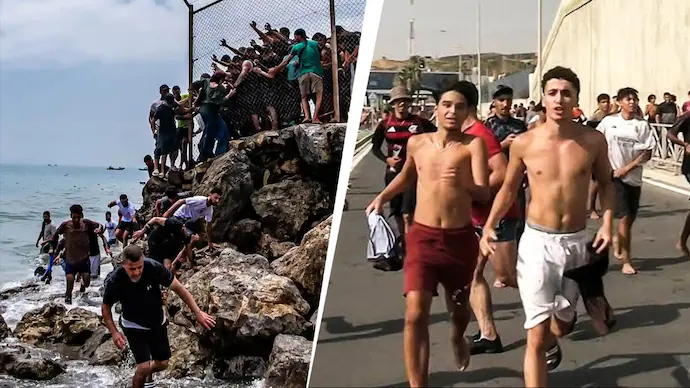
The Spanish enclave of Ceuta has once again become a major flashpoint in Europe’s migration debate. In recent days, thousands of migrants have tried to enter Ceuta from Morocco, creating a border emergency that has pushed local authorities to their limits and forced Spain to send military support to help control the situation.
This is more than a border story. It is a human story shaped by danger, hope, and desperation. For the people making the crossing, the journey often represents a chance at safety and a better future. For governments, it has become a difficult test of how to manage migration, security, and humanitarian responsibility at the same time.
Why Ceuta Matters
- Ceuta is a Spanish territory in North Africa.
- It is also part of the European Union.
- Any surge there quickly becomes a Europe-level issue.
Ceuta’s location makes it one of the most sensitive migration points between Africa and Europe. When pressure rises on this border, the effects are felt immediately by local authorities, national leaders, and European policymakers.
The enclave has long been seen as a gateway, and that is exactly why it attracts so much attention whenever crossings increase. A small place can become a big political story very fast when it sits on the edge of two continents.
What Happened At The Border
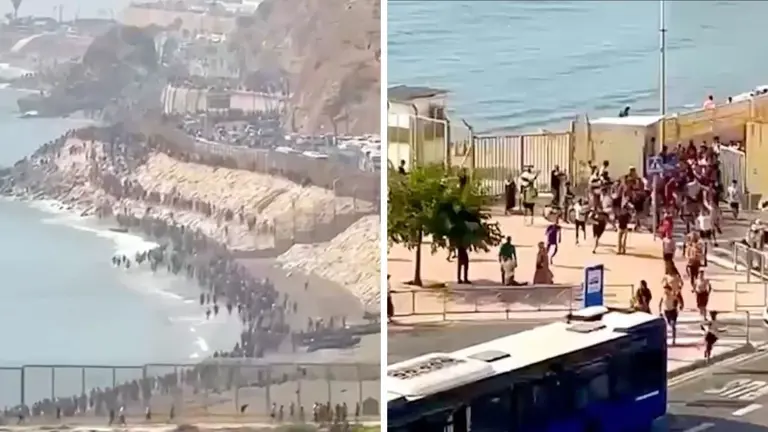
- Thousands of migrants crossed in a short time.
- Some climbed fences.
- Others tried to swim or wade around coastal barriers.
The speed of the movement overwhelmed local border systems. Officials were suddenly dealing with a large number of arrivals, and emergency services had to respond quickly. Spain then deployed military support to help police secure the area and restore control.
For many migrants, the crossing was not a planned political act. It was a desperate attempt to escape hardship and reach a place where life might be safer or more stable. Once inside, many were intercepted and taken to temporary facilities that were already under pressure.
Human Cost And Response
- Some migrants have died during the crossing.
- Others were rescued after dangerous sea attempts.
- Children and vulnerable people are also affected.
This crisis is being described not only as a security issue but also as a humanitarian emergency. The people involved are often taking enormous risks, and the danger increases when the crossing happens in rough waters or under chaotic conditions.
Spain has deployed military units to support police and manage the border, while Morocco has also taken steps to stop further crossings from its side. Both governments say they are working together, but the scale of the arrivals has made the situation difficult to control.
Spain And Morocco Respond
Spain has deployed military units to support police and help secure the border, while Morocco has taken steps to stop further crossings from its side. Both governments have said they are working together, but the scale of arrivals has made the situation hard to control.
This crisis also puts both countries in a politically sensitive position. Spain must protect its border and manage new arrivals, while Morocco faces pressure to prevent migration from becoming a larger security problem. At the same time, any hard response can draw criticism from human rights groups, who argue that migrants should be treated with dignity and access to legal protection.
Why Europe Is Watching
Ceuta matters far beyond Spain. Because it is a gateway into Europe, what happens there often shapes wider debates about migration, asylum, and border policy. A surge in Ceuta is not seen as an isolated event; it is viewed as a warning sign for the rest of Europe.
The situation has also revived discussion about how countries should respond when migration pressure rises suddenly. Some emphasize tighter border control, while others stress the need for compassion and long-term solutions. Ceuta sits right at the center of that debate.
Conclusion
Ceuta matters far beyond Spain. Because it is a gateway into Europe, what happens there often shapes wider debates about migration, asylum, and border policy. A surge in Ceuta is seen as a warning sign for the rest of Europe.
The crisis also shows that migration is not only about borders. It is tied to poverty, instability, and the hope of finding safety or opportunity elsewhere. That is why the story keeps returning, even when authorities manage to slow it down for a while.
For now, the enclave remains under intense pressure. But the bigger questions are still there. Why are so many people willing to risk everything to cross? And how can Europe respond in a way that is both secure and humane?
Ceuta’s latest migrant crisis is a reminder that border stories are also human stories. Each crossing carries fear, hope, and uncertainty, and each response shapes the future of migration policy in Europe.
About The Author