



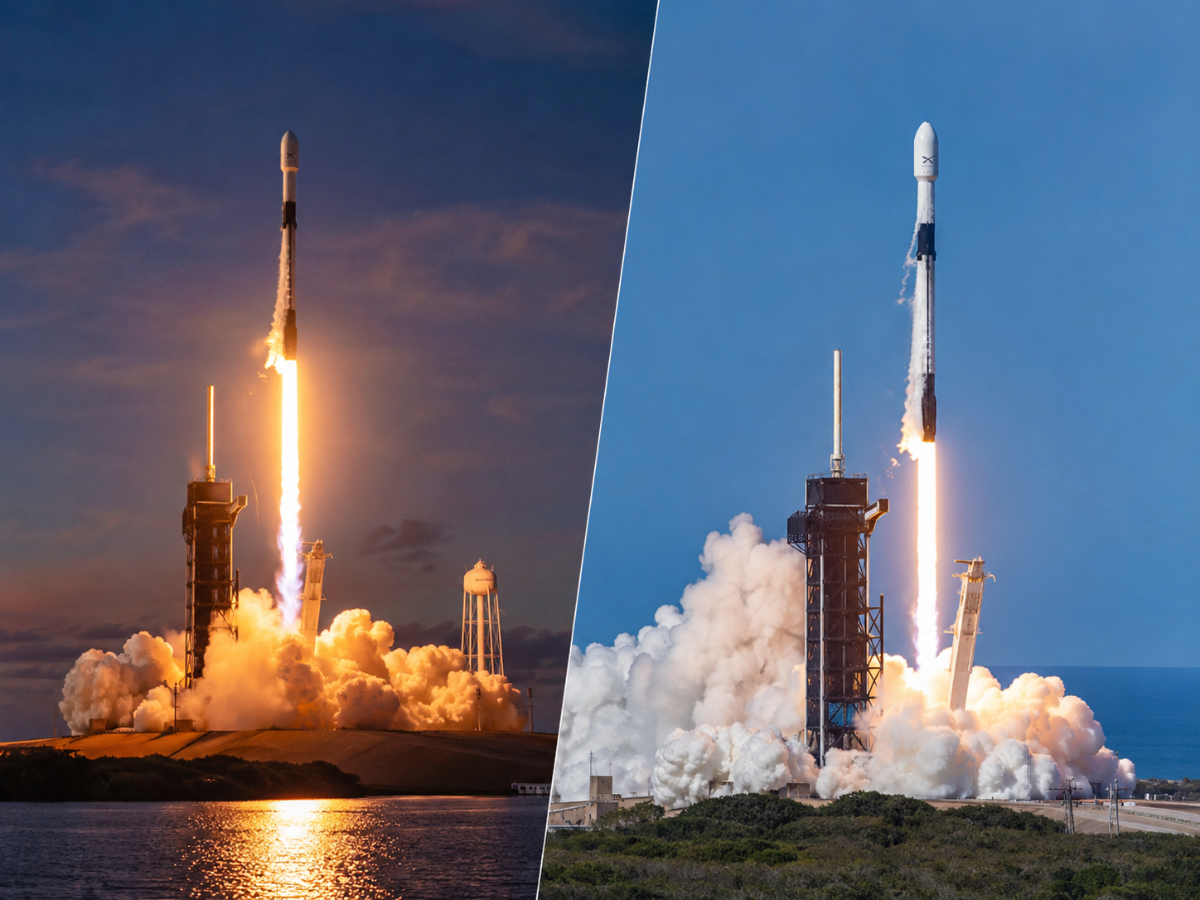
SpaceX achieved another major milestone with a record-breaking “double-header” launch, sending two Falcon 9 rockets into space within a short period. The back-to-back missions highlighted the company’s rapid launch capability and the growing importance of reusable rocket technology.
Two Launches in One Day
The double-header involved two separate Falcon 9 missions launched from different facilities. One rocket lifted off from Florida, while the second launched from Vandenberg Space Force Base in California.
The missions carried satellite payloads into orbit, including spacecraft linked to SpaceX’s Starlink internet network. Completing two launches so close together demonstrated the company’s ability to coordinate teams, ground systems, weather monitoring, range safety, and recovery operations across multiple locations.
Falcon 9 Boosters Return Safely
A major part of the achievement was the successful recovery of both Falcon 9 first-stage boosters. After separating from their upper stages, the boosters travelled back toward Earth and landed on designated droneships or landing zones.
These controlled landings are central to SpaceX’s launch strategy. Instead of discarding the booster after one flight, the company can inspect and prepare it for another mission. Reusing the same hardware helps reduce costs and allows SpaceX to maintain a faster launch schedule.
Starlink Mission Adds More Satellites
One of the launches supported the expansion of Starlink, SpaceX’s satellite internet constellation. Starlink satellites operate in low Earth orbit and are designed to provide broadband connectivity to users in locations where conventional internet infrastructure is limited.
With every new batch of satellites, SpaceX increases the network’s coverage and capacity. The company’s continued launch activity has helped Starlink become one of the largest commercial satellite constellations in orbit.
Why the Double Header Matters
A double-header launch is significant because a rocket launch requires extensive preparation. Each mission involves payload checks, fuelling, weather analysis, flight-path coordination, regulatory approval, and communication between several teams.
Successfully completing two missions in a short window shows that SpaceX’s launch system is becoming more efficient and repeatable. It also suggests that reusable rockets can support a future in which satellites, scientific instruments, and spacecraft are sent into orbit more frequently.
A Challenge for the Space Industry
SpaceX’s rapid launch pace is putting pressure on other space companies and government agencies to improve their own systems. Traditional launch programmes often require longer preparation periods and may use rockets only once.
The double-header achievement demonstrates the advantage of an integrated launch model. SpaceX designs its rockets, operates launch sites, manages satellite missions, and coordinates booster recovery within the same organisation.
However, rapid launches also require careful safety management. Each mission must meet strict technical and regulatory standards, and even a small problem can result in a delay or cancellation.
Environmental and Orbital Concerns
The increase in launches has also led to discussions about environmental effects and the growing number of satellites around Earth. Scientists and regulators are monitoring issues such as space debris, orbital congestion, and the impact of large satellite networks on astronomy.
SpaceX will need to balance its ambitious launch plans with responsible orbital management. Reliable satellite disposal procedures and careful coordination with other spacecraft will be increasingly important as more vehicles enter low Earth orbit.
What Comes Next?
The record-breaking double-header is expected to support SpaceX’s broader plans for 2026 and beyond. The company will continue launching Starlink satellites and commercial payloads while developing its larger Starship vehicle for future lunar and deep-space missions.
Falcon 9 remains the company’s dependable workhorse, while Starship is being designed for heavier payloads and human exploration. Together, the two programmes represent SpaceX’s strategy of combining frequent near-Earth launches with long-term ambitions beyond Earth.
The double-header launch was more than a pair of successful missions. It was a demonstration of speed, coordination, and reusability. As SpaceX continues increasing its launch frequency, such back-to-back missions could become a regular part of the modern spaceflight industry.
About The Author