


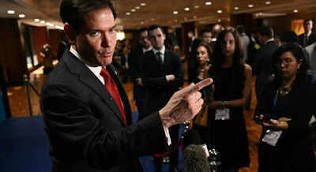
Escalating hostilities between the United States and Iran have entered a critical phase, with US Secretary of State Marco Rubio reaffirming Washington’s demand for a denuclearised Iran even as Tehran signals it is “not ready” to accept a new nuclear deal.
Speaking amid ongoing US strikes and regional tension, Secretary Rubio laid out the US position:
- The US remains open to diplomacy and eventual nuclear talks with Iran.
- But any agreement must ensure Iran cannot develop nuclear weapons.
- Rubio claimed Iran’s military infrastructure and economy have been “severely weakened” by the war so far.
- He warned that Iran is “in a lot of trouble” and stressed that Washington will not allow Tehran to control the Strait of Hormuz or threaten freedom of navigation.
Rubio’s comments came as lawmakers pressed the administration on the war’s scope, duration, and exit strategy. Despite the fighting, he said he remains optimistic about the potential for resumed nuclear negotiations once conditions allow.
Tehran’s Stance: Compromises Possible, But Deal Not Imminent
On the Iranian side, recent statements suggest a more cautious, conditional approach:
- Iranian officials have said Tehran is ready to consider compromises on its nuclear program if the US is willing to discuss lifting sanctions.
- However, overall messaging from Tehran indicates it is “not ready” to lock in a deal under current wartime conditions, especially while US and Israeli strikes continue.
- Iranian state media and military spokespeople have instead focused on resistance narratives, claiming strikes on US drones, helicopters, and personnel, and portraying the conflict as a test of national resolve.
This gap—US insistence on denuclearisation first, and Iran’s demand for sanctions relief and an end to hostilities—remains the core obstacle to any near-term diplomatic breakthrough.
War Context: What’s Happening on the Ground
The broader conflict, often referred to as Operation Epic Fury, has seen:
- Large-scale US and Israeli airstrikes on Iranian military, missile, and naval targets, including drone carriers and ships in the Persian Gulf.
- Iranian retaliatory strikes using ballistic missiles and drones against US bases and allied facilities in Iraq, Kuwait, Bahrain, and the wider Gulf region.
- Rising US casualties, with multiple American service members killed and dozens wounded since the campaign began.
- Intensified focus on the Strait of Hormuz, through which a significant share of global oil passes, raising fears of a major energy shock if the chokepoint is disrupted.
US defense officials have described the operation as aimed at destroying Iran’s missile production, naval capabilities, and security infrastructure to prevent it from ever obtaining a nuclear bomb.
Oil Markets and Global Impact
As the war escalates, the economic fallout is becoming more visible:
- Brent crude has surged past $90 per barrel amid fears of prolonged disruption to Gulf oil flows.
- Governments and airlines are monitoring airspace closures, flight reroutes, and potential shipping restrictions in the Persian Gulf and Red Sea.
- Countries including Pakistan have expressed “deep concern” over attempts to draw regional players like Saudi Arabia deeper into the conflict, warning of wider war risks.
Live trackers and war-status sites now provide real-time maps of danger zones, airport closures, and evacuation advisories for citizens in the region.
What to Watch Next
- Diplomatic signals: Whether Rubio’s talk of “eventual nuclear talks” translates into back-channel contacts or a formal proposal.
- Iran’s red lines: If Tehran moves from “considering compromises” to concrete offers linking nuclear limits to sanctions relief.
- Military escalation: Further US strikes on nuclear-related sites, power infrastructure, or Revolutionary Guard assets, and any major Iranian response targeting US forces or Gulf allies.
- Domestic pressure in the US: How Congress reacts to rising casualties and costs, and whether it pushes for clearer war aims or a negotiated off-ramp
About The Author