



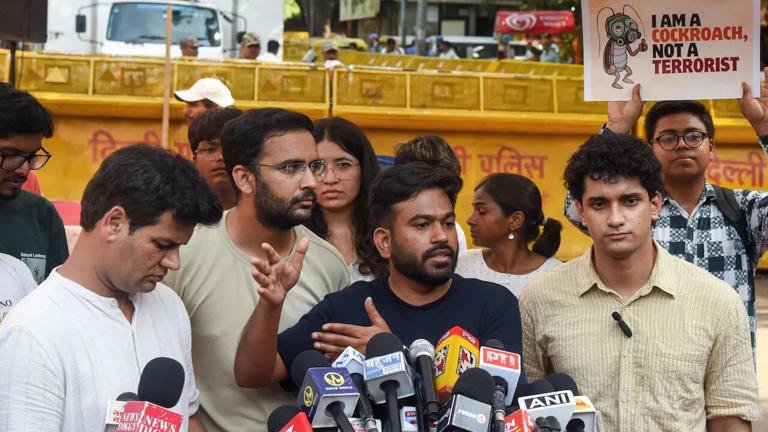
Centre’s Big Outreach to CJP: “Your Convenience, Any Place, Any Time” – What It Means for the Protest
The Union Government has intensified its outreach to the Cockroach Janta Party (CJP), offering to hold talks “at your convenience, any place, any time” as student-led protests over NEET and related issues continue in Delhi. Union Minister Dr Jitendra Singh confirmed that the Centre has sent four formal proposals for discussions since last afternoon, signaling urgency to end the standoff.
Fresh Offer: Talks at JP Nadda’s Office or Residence
In a clear de-escalation move, the Centre has put forward a flexible invitation:
- Who will attend: Union Health Minister Jagat Prakash (JP) Nadda and Union Minister Dr Jitendra Singh.
- Where: Either JP Nadda’s office or his residence, or any other venue the protesters choose.
- When:“Any time” – the government says it is ready to meet immediately and devote as much time as needed.
Dr Jitendra Singh stated:
“This is a standing invitation to all our youth friends that the government is ready for discussions on all issues at your convenience, at any time… We do not stand on prestige.”
Why the Centre Is Pushing Hard Now
The outreach comes amid:
- Escalating protests around Jantar Mantar and planned marches toward Parliament during the Monsoon Session.
- Political pressure as Opposition parties, including Congress and AAP, have backed the students and demanded a discussion in Parliament.
- High-profile engagement: Activist Sonam Wangchuk held a late-night meeting with government representatives, after which sources said the Centre is “hopeful of a breakthrough.
Government sources have repeatedly emphasized that its “doors for conversation are wide open” and that it wants to resolve the issue through dialogue rather than confrontation.
CJP’s Stance: Willing to Talk, But on Neutral Ground
CJP leaders have indicated they are open to dialogue but have rejected meetings at a minister’s office or residence. Instead, they have proposed:
- Jantar Mantar, or
- Another neutral venue near the protest site
This is seen as a way to maintain pressure, ensure visibility, and avoid the perception of being “summoned” by the government.
Key Demands on the Table
During earlier talks with JP Nadda, CJP representatives reportedly outlined three core demands:
- Immediate release of activist Sonam Wangchuk, who has been detained in connection with the protests.
- Resignation of Union Education Minister Dharmendra Pradhan, whom protesters blame for policy failures around NEET.
- ₹1 crore compensation for the families of NEET aspirants who allegedly died by suicide due to exam-related stress and controversies.
The government has asked for time to consult the BJP leadership before formally responding to these demands.
Timeline: How the Outreach Unfolded
- July 19–20: Initial contacts via Delhi Police and District Administration; CJP insists on speaking directly with the PM or a Cabinet Minister.
- July 21–22: First formal meeting between CJP spokespersons Saurav Das and Ashutosh Ranka with JP Nadda at his residence. CJP submits a written memorandum of demands.
- July 22–23: Centre sends four formal proposals for further talks; Minister Jitendra Singh makes the “any place, any time” offer public.
What to Watch Next
- Venue of talks: Whether CJP accepts JP Nadda’s office/residence or insists on Jantar Mantar/neutral ground.
- Parliament angle: If the government agrees to raise the issue in the Monsoon Session, as sought by CJP and Opposition parties.
- Concessions on core demands: Especially on Wangchuk’s detention, ministerial accountability, and compensation for affected NEET families
About The Author


