


The first explosion came just before dawn, a deep, shuddering boom that rattled windows across central Kyiv. For many residents, the sound was tragically familiar: another air raid siren, another rush to the hallway or basement, another night of waiting to see if this time the missile would hit nearby.
This time, it did.
In the early hours of a cold August morning, Russian missiles struck residential areas of Ukraine’s capital, killing at least nine people and injuring dozens more. What began as another alert in a long war quickly turned into a scene of smoke, shattered glass, and desperate searches for loved ones.
A Morning Turned into a Funeral
Olena, a 42-year-old teacher, was making coffee when the first blast echoed through her apartment block in western Kyiv. “I thought it was far away,” she said later, wrapped in a blanket outside her building. “Then the second hit, and the whole wall shook. The lights went out. My neighbor started screaming.”
Emergency crews arrived within minutes, their blue lights cutting through the dust hanging over the street. Firefighters battled blazes in two apartment blocks, while paramedics triaged the wounded on the sidewalk, laying them on stretchers beside broken bricks and twisted metal.
By mid-morning, Ukrainian authorities confirmed at least nine deaths. The victims included an elderly couple, a young father, and a university student who had been on her way to an early shift at a café. Dozens more were hospitalized, some in critical condition, with injuries from shrapnel, burns, and collapsing walls.
“We lost everything in seconds,” said Andriy, 35, whose third-floor apartment was partially destroyed. “The TV, the sofa, my daughter’s toys—all gone. But we’re alive. Others weren’t so lucky.”
Life Under the Sirens
For Kyiv’s 3 million residents, air raid sirens have become a grim part of daily life. Schools, offices, and cafes all have designated shelters. Phone apps push alerts the moment missiles are detected. People keep go-bags ready: documents, medications, a flashlight, a bottle of water.
But no amount of preparation can fully dull the fear.
“Every time the siren goes off, your heart stops,” said Iryna, a nurse who treated several of the injured. “You tell yourself it will be fine, but then you see the bodies coming in, children covered in dust, and you realize: this is still happening. In 2026. In the middle of Europe.”
The latest strike targeted a mix of residential buildings and critical infrastructure. Power was knocked out in several districts, leaving thousands without electricity or heating as temperatures dipped overnight. Water supplies were disrupted in some neighborhoods, forcing residents to queue with buckets and bottles at distribution points set up by the city.
The Human Toll Behind the Headlines
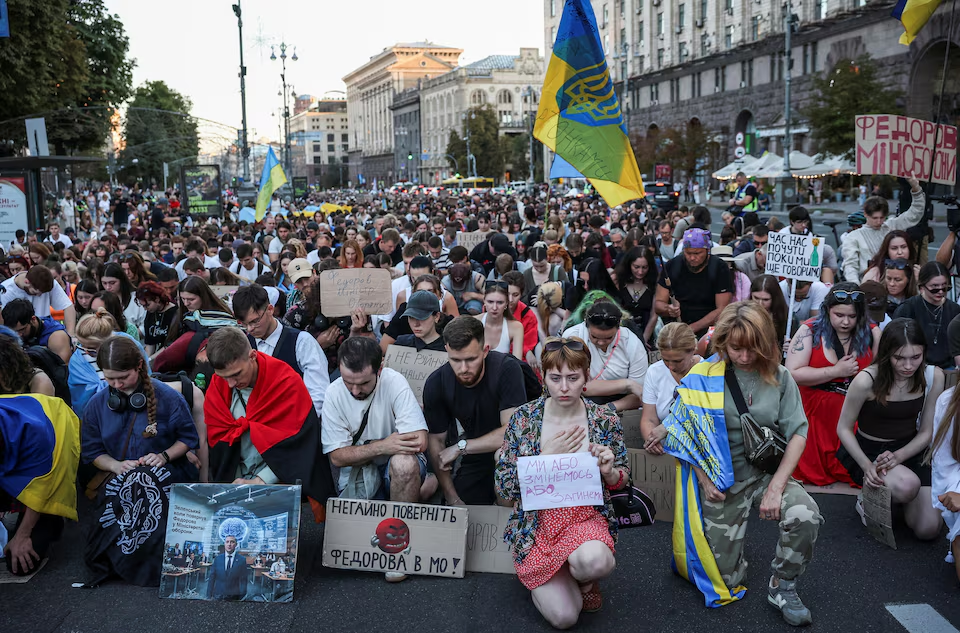
At a makeshift memorial near one of the damaged buildings, neighbors laid flowers, candles, and children’s drawings. A photo of 28-year-old Maksym, one of the dead, was propped against a lamppost. He had been walking home from his night shift when the missile hit.
“He was supposed to start a new job next week,” said his sister, Katya, fighting back tears. “We were going to have dinner on Sunday. Now I’m standing here, trying to understand how a normal night becomes… this.”
Volunteers moved through the crowd, handing out hot tea and sandwiches. Local priests blessed the injured. Strangers hugged each other without introducing themselves, bound by the shared shock of survival.
“They Want Us to Break. We Won’t.”
Ukrainian officials condemned the attack as yet another deliberate strike on civilians. President Zelenskyy called it “a terrorist act aimed at terrorizing our people,” and urged Western partners to accelerate deliveries of advanced air defense systems.
“Every missile that reaches our cities is a failure of the world to protect us,” he said in a video address. “We intercept many, but not all. We need more systems, more interceptors, more support. Otherwise, more families will bury their children.”
Russia has not commented directly on the Kyiv strike, but its defense ministry has repeatedly claimed that its attacks target only military and energy infrastructure. Independent investigations, however, have documented repeated hits on residential areas, schools, and hospitals.
For many in Kyiv, such explanations ring hollow.
“They say they hit military sites,” said Dmytro, 51, who helped pull a neighbor from the rubble. “But where was the military site in our courtyard? Where was it in the children’s playground?”
Resilience in the Rubble
Despite the fear and grief, the city’s response was swift and determined. Within hours, heavy machinery was clearing debris. Power crews worked through the day to restore electricity. Schools announced they would remain open, with counseling services available for traumatized students.
“We will not let them win by making us afraid to live,” said Olena, the teacher, as she swept broken glass from her hallway. “Yes, we are tired. Yes, we are scared. But we are still here. We still teach, we still work, we still love.”
Neighbors organized a fundraiser for the families who lost loved ones. A local band announced a free concert in the park later in the week. “Life must go on,” one organizer wrote online. “Otherwise, the missiles win.”
A War That Feels Endless
As night fell again over Kyiv, the streets were quieter than usual. People checked their phones for air raid alerts before heading to bed. Some chose to sleep in hallways or basements, just in case.
The nine who died will be buried in the coming days. Their families will navigate the unbearable rituals of grief: choosing coffins, writing eulogies, facing the empty chairs at the dinner table. The injured will undergo surgeries and rehabilitation, carrying scars both visible and invisible.
And the war will continue, with no clear end in sight.
For now, Kyiv endures—bruised, grieving, but unbroken. As one resident wrote on a piece of cardboard taped to a damaged wall: “They can destroy our homes, but not our will.”
About The Author