



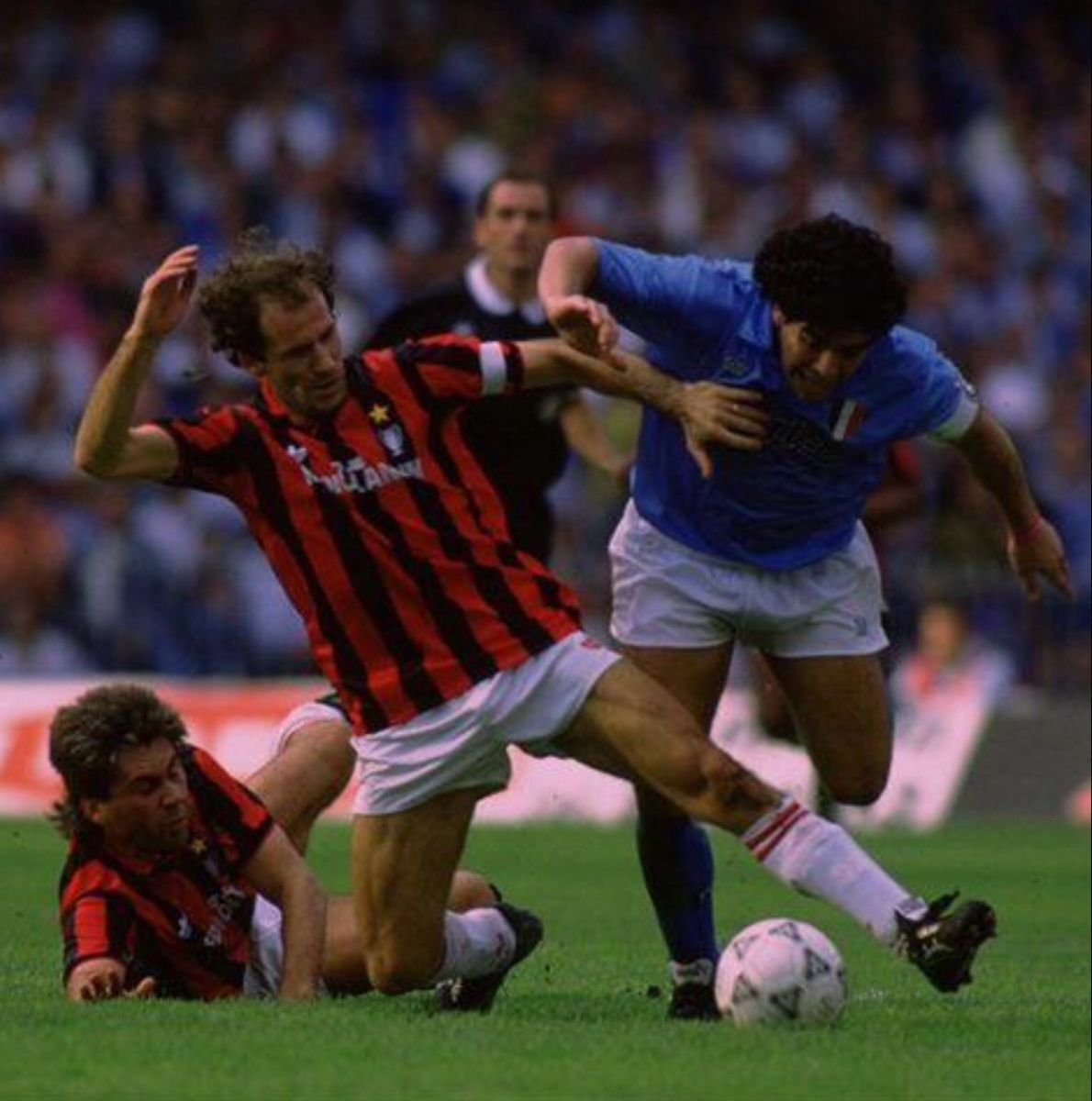
Franco Baresi, the elegant, intelligent center-back who became the very symbol of AC Milan and a cornerstone of Italy’s golden football era, has died at the age of 66. AC Milan announced the news on 31 July 2026, triggering an outpouring of grief and tributes from across the football world, from former teammates to rival clubs and global football bodies.
A One-Club Legend
Baresi’s career is a rare story of absolute loyalty in modern football. He joined AC Milan’s youth setup as a boy and made his senior debut in 1977, going on to spend his entire 20-year professional career with the Rossoneri until his retirement in 1997. In an age of frequent transfers and short-term contracts, Baresi’s two-decade commitment to a single club became legendary, earning him the nickname “eternal No. 6” among fans and media.
Across 719 official appearances for Milan, he won six Serie A titles and three European Cup/Champions League trophies, anchoring one of the greatest defensive units in football history. His Milan side, often paired with Paolo Maldini, Alessandro Costacurta, and Mauro Tassotti, set benchmarks for defensive organization, discipline, and tactical intelligence under managers like Arrigo Sacchi and Fabio Capello.
The Defender Who Redefined the Position
Unlike many of his contemporaries who relied on physicality, Baresi was celebrated for his anticipation, positioning, and calmness under pressure. He read the game a step ahead of attackers, intercepting passes and breaking up moves before they became dangerous. His composure in possession allowed him to start attacks from the back, embodying the modern idea of a ball-playing centre-back long before the term became fashionable.
Coaches and peers often described him as a “defensive conductor,” orchestrating the back line with quiet authority. His leadership was not loud or theatrical but rooted in consistency, intelligence, and an unshakeable sense of responsibility. That demeanor made him the natural captain for both club and country.
International Glory with Italy
For the Italian national team, Baresi earned 81 caps and featured in multiple major tournaments across the 1980s and 1990s. He was part of Italy’s 1982 World Cup-winning squad in Spain, where the Azzurri defeated West Germany in the final to lift the trophy. Though a young squad member at the time, he developed into a defensive mainstay in the years that followed.
Baresi also played a crucial role in Italy’s run to the 1994 World Cup final in the United States, where they narrowly lost to Brazil in a penalty shootout. His partnership with Maldini in defence remained one of the most respected defensive duos in international football.
Tributes from a Mourning Football World
Following the announcement of his death, tributes poured in from across the sport. Paolo Maldini, his longtime Milan and Italy teammate, joined a wave of former players, managers, and clubs calling Baresi “one of the greatest defenders in history” and “a true legend of Italian football.” AC Milan’s official statement described the club’s history as being “in tears” and said Baresi’s “example and integrity will be forever etched into the club’s DNA, just as his iconic No. 6 shirt is.”
Opposing clubs, football federations, and media outlets echoed the sentiment, recognizing him not only for his trophies but for the dignity and class with which he carried himself on and off the pitch.
Health Struggles and Final Chapter
AC Milan revealed that Baresi had undergone surgery in August 2025 to remove a pulmonary (lung) nodule. Following the operation, he was placed under oncology follow-up and received immunotherapy as a preventive measure. The club did not disclose a specific cause of death, but his health challenges over the past year had been known to close circles.
Legacy Beyond Trophies
Baresi’s influence extends far beyond his trophy cabinet. AC Milan retired his number 6 shirt in his honour, a rare gesture reserved for players who transcend sport to become cultural icons. After retiring, he served as an honorary vice-president of the club, maintaining a close relationship with fans and the organisation.
His story—of unwavering loyalty, sustained excellence, and quiet leadership—has become a reference point for defenders and leaders in every generation. In an era increasingly defined by short-term thinking, Baresi’s life reminds football of the power of commitment, identity, and integrity.
Franco Baresi may have left the game, but his legacy endures in every AC Milan defender who wears the spirit of the No. 6, and in every young player taught that greatness is as much about character as it is about skill.
About The Author