


Tensions between Iran and Israel have flared back into open, high‑intensity conflict after a fragile ceasefire broke down. What began as targeted strikes has widened into a regional confrontation involving the U.S., Iran’s allied militias, and repeated missile and drone exchanges—raising fresh fears of a broader Middle East war.
Recent Escalation: Missiles, Strikes, and a Shaky Truce
After a short period of relative calm, both sides have resumed heavy attacks:
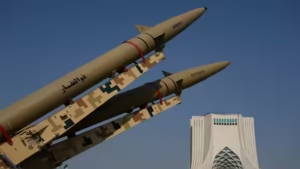
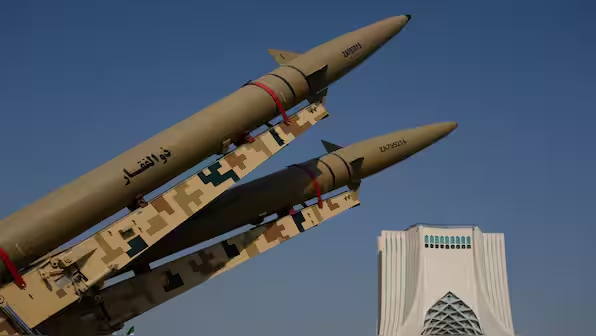
- Iran has launched multiple waves of ballistic missiles and drones toward Israel, forcing millions into shelters and causing damage in and around Tel Aviv and other cities.
- Israel has responded with extensive airstrikes deep inside Iran, hitting military installations, missile launch sites, and infrastructure in and around Tehran and other provinces.
- U.S. involvement has grown, with American forces conducting repeated air strikes on Iranian military bases, air defenses, and coastal/maritime targets over several consecutive nights.
Diplomacy has struggled to keep pace. European‑led talks and UN meetings have so far failed to produce a breakthrough, while Washington has insisted that any lasting deal must involve direct U.S.–Iran negotiations.
Casualties and Damage: A Mounting Human Cost
The human toll is rising on both sides, though exact numbers remain contested:
- Iranian health authorities and independent monitors report hundreds killed, and thousands injured inside Iran from Israeli and U.S. strikes, including damage around military and nuclear‑related sites.
- In Israel, dozens have been killed in Iranian missile and drone attacks, including civilians and children, with significant property damage in urban areas.
- The IAEA has warned that attacks near Iranian nuclear facilities have caused some radiological leaks, stressing there is currently no major public risk—but cautioning that the situation could worsen if strikes continue.
Beyond direct casualties, the war has disrupted daily life: frequent air‑raid sirens in Israel, blackouts and emergency repairs in parts of Iran, and growing anxiety across the region.
Leadership Changes in Iran and a Hardening Stance
The conflict has also reshaped Iran’s leadership:
- Supreme Leader Ayatollah Ali Khamenei was killed in earlier U.S.–Israeli strikes, and his son Mojtaba Khamenei has been named the new supreme leader, according to Iranian state media.
- President Trump has framed the war as a campaign to “diminish Iran’s military and regime,” speaking of “major combat operations” and demanding “unconditional surrender,” with no clear end date for the conflict.
This leadership transition, combined with hardened rhetoric on all sides, has made diplomacy even more delicate.
Regional Flashpoints: Strait of Hormuz, Iraq, Gaza, and Lebanon
The war is no longer confined to Iran and Israel:
- Strait of Hormuz: Iran’s top military command announced it would shut the strait to maritime traffic, citing alleged ceasefire breaches by the U.S. and Israel. This move threatens global oil flows and has triggered heightened naval alerts in the Gulf.
- Iraq and Syria: Iranian‑backed militias have targeted U.S. and allied bases with rockets and drones, while U.S. forces have hit back at militia and IRGC‑linked sites.
- Gaza and Lebanon: Fighting involving Israel, Hamas, and Hezbollah has intensified at times, with a U.S.–Iran interim understanding aimed at containing the broader conflict repeatedly tested. A recent U.S.–brokered ceasefire between Israel and Hezbollah in Lebanon has helped but remains fragile.
- Maritime security: Projectiles have struck commercial vessels in the region, and a tanker was reportedly hit, underlining the risk to global shipping and energy markets.
Diplomacy in Overdrive—But No Deal Yet
Multiple diplomatic tracks are active but stalled:
- Pakistan‑mediated talks in Islamabad produced a short “immediate ceasefire” in April, but marathon negotiations failed to yield a comprehensive deal.
- U.S. position: President Trump has dismissed purely European initiatives, insisting Washington must lead any serious negotiation with Tehran. He has alternated between threats of “very strong military action” and brief windows for talks.
- UN and Europe: Emergency UN Security Council sessions have seen harsh exchanges between Iran and Israel, but no binding resolution. European leaders have pushed for de‑escalation and nuclear safeguards, yet progress remains limited.
For now, the U.S. says the ceasefire status with Iran is unchanged, even as strikes continue and rhetoric hardens.
What This Means for the Region—and the World
- Risk of wider war: Every new missile salvo, base strike, or shipping incident raises the chance that more countries get dragged in, from Gulf states to NATO members.
- Oil and global markets: Any sustained disruption in the Strait of Hormuz or major Gulf infrastructure could spike oil prices and trigger inflationary pressures worldwide.
- Nuclear concerns: Repeated attacks on or near nuclear sites increase the risk of a radiological incident and complicate any future deal on Iran’s nuclear program.
What to Watch Next
- Ceasefire stability: Whether the current U.S.–Iran ceasefire holds or collapses into renewed full‑scale hostilities.reuters+1
- Hormuz and shipping: Any formal blockade or major incident in the strait that could draw in global powers.
- Diplomatic breakthrough: Signs of a renewed negotiation framework, especially involving the U.S., Iran, and key regional players.
- Escalation around Israel’s borders: Spillover into Lebanon, Syria, Gaza, or direct attacks on U.S. bases that could widen the war.
About The Author