


The Food Safety and Standards Authority of India’s recent action against select liquor variants, including some Old Monk and McDowell’s products, has sparked a major debate in the alcohol industry. The issue is not a blanket ban on liquor, but a regulatory crackdown on products that FSSAI says may be using non-permitted flavouring practices and misleading label claims.
At the heart of the matter is consumer transparency. FSSAI has said that some manufacturers were adding external flavours to rum or whisky and still selling the products as standard spirits, which could mislead buyers about what they are actually drinking.
Why FSSAI Acted
According to reports, FSSAI found that certain products were made largely from neutral or extra neutral alcohol and then given added flavouring to imitate the taste and aroma of rum or whisky. The regulator’s view is that if a drink is fundamentally a flavoured spirit, it should not be marketed as a normal rum or whisky.
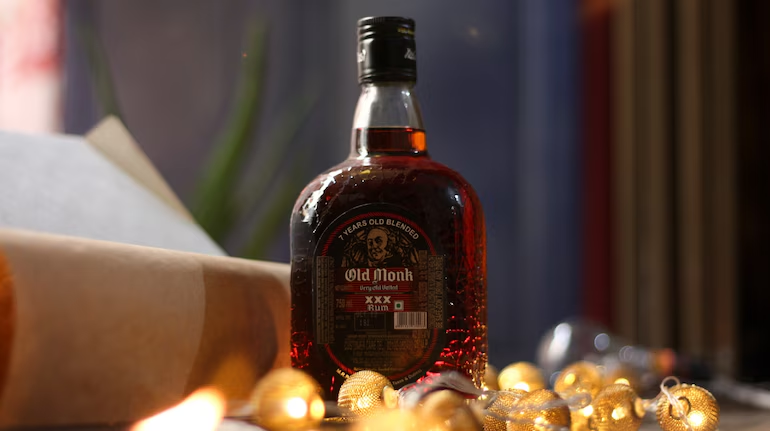
The agency also questioned age-related claims on some labels. One Old Monk variant reportedly carried a “7 years old blended” claim, but investigations suggested that the mature spirit content was only a small portion of the blend. FSSAI said such claims can violate labelling rules because the age statement should reflect the youngest spirit in the blend.
Brands and Variants Affected
The enforcement action has reportedly covered several well-known names, including variants of Old Monk, McDowell’s No. 1 Rum, Bagpiper Deluxe Whisky, Royal Challenge Whisky, and Antiquity Blue Whisky. Reports also say specific manufacturing units were barred from selling certain products, while inspections and notices were issued to other producers.
It is important to note that this is not described as a ban on the entire brands in every form. The action appears targeted at particular variants and specific manufacturing practices that FSSAI believes do not meet regulatory standards.
What the Regulator Says
FSSAI has clarified that it is not objecting to all flavouring in alcoholic beverages. The issue, it says, is the use of flavours identical to the alcoholic beverage itself, such as rum flavour in rum or whisky flavour in whisky, when that practice has no legitimate technological purpose and may mislead consumers.
The regulator has also emphasized that many manufacturers remain fully compliant with existing standards. In other words, FSSAI is presenting this as a targeted enforcement action, not a condemnation of the entire liquor sector.
Industry Impact
For liquor companies, this move is significant because it puts label language, product identity, and manufacturing methods under sharper scrutiny. Brands that rely on flavouring or branding language to suggest maturity, authenticity, or premium quality may now face closer examination.
For consumers, the action could improve transparency. If labels are stricter and product descriptions become more accurate, buyers may get a clearer picture of what they are purchasing. At the same time, the sudden attention on familiar brands is likely to affect trust, at least in the short term.
Blog Conclusion
FSSAI’s action against selects Old Monk, McDowell’s, and other liquor variants is really a story about standards, not just sales. The regulator is signaling that alcohol labels must match what is actually inside the bottle, and that misleading flavour or age claims will not be ignored.
That makes this case important beyond the liquor industry. It reflects a larger shift toward stricter labeling enforcement, clearer consumer disclosure, and stronger accountability in branded food and drink products.
A tightened rulebook may cause discomfort for producers, but it also pushes the market toward honesty. And in a sector where brand reputation is everything, honesty may matter more than ever.
About The Author