


Tamil Nadu politics was shaken when Udhayanidhi Stalin, a senior DMK leader and the state’s Leader of Opposition, was reportedly arrested over controversial remarks made during a public speech. What began as a political comment quickly turned into a major legal and public controversy, drawing reactions from supporters, critics, and legal experts alike.
The incident has become more than a routine criminal case. It now sits at the center of a larger debate about political speech, the boundaries of criticism, and the way law enforcement responds when public figures make provocative remarks.
What Triggered the Case
The controversy reportedly began after Udhayanidhi Stalin made remarks at a rally in Thanjavur that were viewed by opponents as offensive and disrespectful toward an actor. A complaint followed, and the police registered a case based on those comments.
According to reports, the complaint was filed by a Tamilaga Vettri Kazhagam functionary, and the police moved ahead with action after reviewing the allegations. The case reportedly included multiple legal sections, including those related to promoting enmity and making offensive or harassing remarks. Once the FIR was filed, the matter stopped being just a political dispute and became a legal one.
That transition is significant. In Indian politics, speeches often push the limits of acceptable language, but when a complaint is formally converted into a police case, the stakes rise immediately. This was exactly what happened here.
Arrest and Court Drama
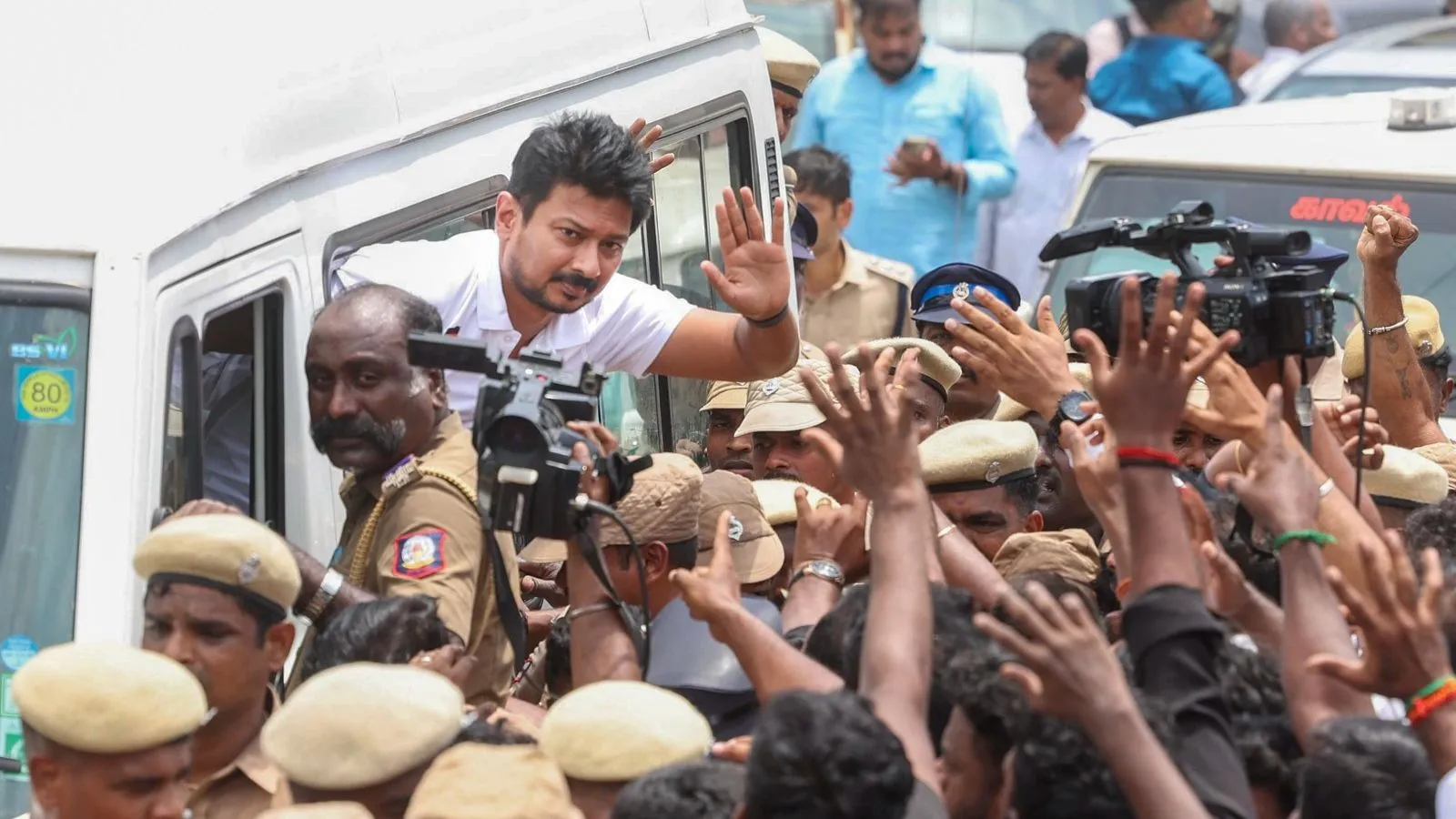
Reports say police arrived at Udhayanidhi Stalin’s residence in Chennai and detained him amid considerable tension. The scene reportedly drew attention because of his political stature and the sensitivity of the allegations.
At around the same time, his legal team reportedly moved the Madras High Court seeking relief. The court’s involvement made the issue even more visible, and the arrest quickly became a live political and legal flashpoint. Udhayanidhi himself is said to have dismissed the action as politically motivated and insisted that he would challenge it through legal means.
This is one reason the case spread so rapidly across news cycles. It was no longer about one speech alone. It became a story about whether state power was being used fairly and whether public figures are being singled out for their words.
Political Reactions
The arrest triggered strong reactions across Tamil Nadu. DMK supporters viewed the move as an attempt to silence a political leader, while opponents argued that he should face the consequences of making objectionable remarks.
Reports also mention protests and public demonstrations by supporters, which added to the tension and made the issue feel larger than a single legal case. In a state where political identity is often closely tied to public rhetoric, such incidents can quickly become emotional and symbolic.
The DMK leadership framed the matter as vindictive. On the other side, critics said the case was simply about accountability and respect. That clash of narratives is what made the controversy so powerful.
Why The Case Matters
This arrest matters because it touches on one of the most difficult questions in democracy: how far can political speech go before it becomes punishable? Leaders are expected to speak boldly, but they are also expected to avoid language that may humiliate, inflame, or target individuals unfairly.
The case also shows how quickly politics, media, and law enforcement can collide in Tamil Nadu. A speech made at a rally turned into a police action, then a court matter, then a statewide political argument. That sequence reflects the intense scrutiny public figures face today.
For supporters of free speech, the case may appear like overreach. For those who prioritize accountability, it may look like a necessary response to unacceptable conduct. Both views are now part of the wider public conversation.
Final Thoughts
Udhayanidhi Stalin’s arrest has become a defining political moment because it goes beyond one leader or one speech. It highlights the fragile balance between expression and responsibility in public life.
Whether the case is ultimately seen as justified legal action or political targeting, it has already left a mark on Tamil Nadu’s political landscape. The controversy has deepened divisions, sharpened debate, and reminded everyone how quickly a political remark can turn into a full-blown crisis.
About The Author