

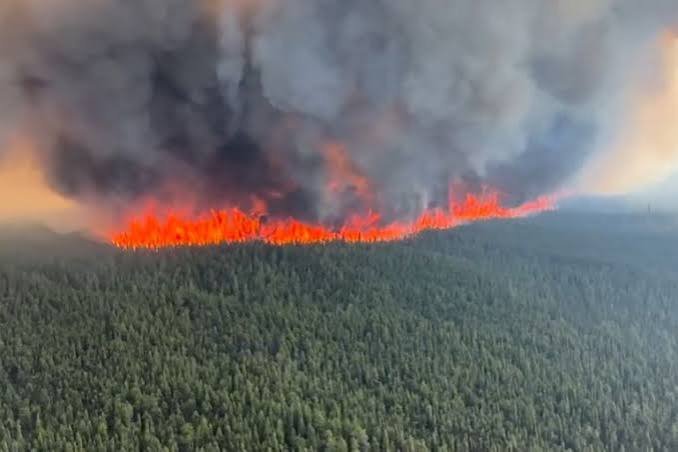
Wildfire Smoke Blankets the Midwest and Northeast: Air Quality Alerts Issued From Minnesota to Maine
Heavy smoke from more than 830 wildfires burning across Canada, combined with fast-moving fires in northeastern Minnesota, is dragging air quality down to unhealthy and in some spots hazardous levels across a wide swath of the United States this week. Forecasters estimate the smoke could affect roughly 100 million people from the Great Lakes to New England into Friday, with air quality alerts already active across Minnesota, Wisconsin, Michigan, New York, New Jersey, Delaware, Maryland, and all of Massachusetts.
What’s Causing the Smoke?
The smoke has two main sources: a massive wildfire season in Canada, where more than 830 fires — including a cluster in Ontario — were burning as of Wednesday morning, and a group of fast-spreading wildfires in northeastern Minnesota that prompted Governor Tim Walz to extend the state’s peacetime emergency by another 30 days.
The reason it’s spreading so far, so fast, comes down to the weather pattern overhead. A heat dome that had been sitting over the northern U.S. is being pushed south into the Carolinas, setting up a northwesterly wind flow aloft. That flow, combined with a pair of weaker cold fronts sagging into the Midwest and Northeast, is pulling smoke from western Ontario and northeastern Minnesota — plus additional lofted smoke from fires farther north in Canada — straight down into the Great Lakes region and out toward the coast. It’s a pattern meteorologists say has shown up in several recent summers and one they’ve been watching closely amid a strengthening El Niño this year.
Which States and Cities Are Affected?
Midwest
- Minnesota: An air quality alert is in effect from Tuesday through Friday, covering the Twin Cities metro area, Alexandria, and Two Harbors. Air quality in Two Harbors, the Grand Portage Tribal Nation, and other parts of northeastern Minnesota is expected to reach hazardous levels — unsafe for the entire population, not just sensitive groups.
- Michigan: The entire state was placed under an air quality alert Wednesday because of particulate pollution, with southeast Michigan also alerted for Thursday. Smoke has settled over northern Michigan, including Mackinaw City.
- Wisconsin: A statewide air quality alert is in effect as smoke moves through the region.
Northeast and Mid-Atlantic
- New York: Counties in western and central New York were under an advisory through midnight Wednesday. New York City was ranked among the most polluted cities in the world on Wednesday and remains under an alert into Thursday.
- Massachusetts: The entire state is under an alert from the Department of Environmental Protection. In Boston, skies visibly shifted from a milky white to a brownish-yellow as the smoke plume moved in.
- Maine: Residents reported yellow and brown-tinted skies, with the National Weather Service office in Gray warning of hazy conditions until a cold front pushes through.
- New Jersey and Delaware: Both states have statewide air quality alerts in effect.
- Maryland: A “code orange” alert is in place, with wildfire smoke compounding an ongoing bout of extreme heat.
- Washington, D.C., and beyond: The thickest smoke was expected to reach the D.C. area by midday Thursday, with lighter, lingering smoke possible as far south as the central Appalachians, Virginia, and North Carolina. Toronto is experiencing similarly poor air quality on the Canadian side of the border.
How Bad Is the Air Quality?
Air quality is tracked on a color-coded index that runs from green (good) to maroon (hazardous). Most of the alerts this week fall in the orange-to-purple range, but parts of northeastern Minnesota are forecast to hit maroon — hazardous for everyone, regardless of health status. New York City’s air was rated among the worst of any major city globally on Wednesday, and several cities have reported visibly discolored skies as a result of the smoke overhead.
Health Risks From Wildfire Smoke
Wildfire smoke is dangerous largely because of the fine particulate matter it carries, known as PM2.5 — particles small enough to lodge deep in the lungs and pass into the bloodstream. Short-term exposure can cause coughing, shortness of breath, a scratchy throat, a runny nose, and burning eyes. Prolonged or repeated exposure raises the risk of more serious problems, including chronic lung issues and increased inflammation linked to heart attacks and strokes.
People with asthma, COPD, or heart conditions, along with older adults, children, and pregnant people, face the highest risk and should take extra precautions even at moderate alert levels.
How to Protect Yourself
- Check your local air quality before heading outside. AirNow.gov and most weather apps offer real-time, color-coded AQI readings for your area.
- At code orange or higher, sensitive groups should limit time spent outdoors.
- At code red, purple, or maroon, everyone should minimize outdoor time — move workouts indoors and keep pet walks brief.
- Keep windows closed and run air conditioning or an air purifier on recirculate mode if you have one.
- Consider a well-fitted N95 or KN95 mask if you must be outside for an extended period during heavy smoke.
- Watch for warning symptoms — chest pain, a racing heartbeat, or severe shortness of breath warrant medical attention.
When Will the Smoke Clear?
Some unhealthy smoke near the ground is expected to linger across parts of the Midwest and Northeast into Friday. The approaching cold fronts should eventually clear out the worst of it, though lighter, hazier air may continue drifting into the central Appalachians, Virginia, and North Carolina for a bit longer. Conditions can shift quickly depending on wind direction, so it’s worth checking local forecasts daily until alerts are lifted.
Frequently Asked Questions
Why is there wildfire smoke in the Midwest and Northeast if the fires are burning in Canada? Upper-level winds can carry wildfire smoke thousands of miles from its source. A northwesterly flow this week is pulling smoke from Ontario and northeastern Minnesota directly across the Great Lakes and into the Northeast.
Is it safe to exercise outdoors right now? It depends on your local AQI reading. At code orange, sensitive groups should scale back outdoor exercise; at code red or higher, it’s best for everyone to move workouts indoors.
How long will the air quality alerts last? Most current alerts run through Friday, though some lighter, lingering smoke could persist a bit longer in parts of the Appalachians and mid-Atlantic.
What should people with asthma or heart conditions do? Stay indoors as much as possible, keep windows closed, have any prescribed rescue medication on hand, and contact a doctor if symptoms worsen.