

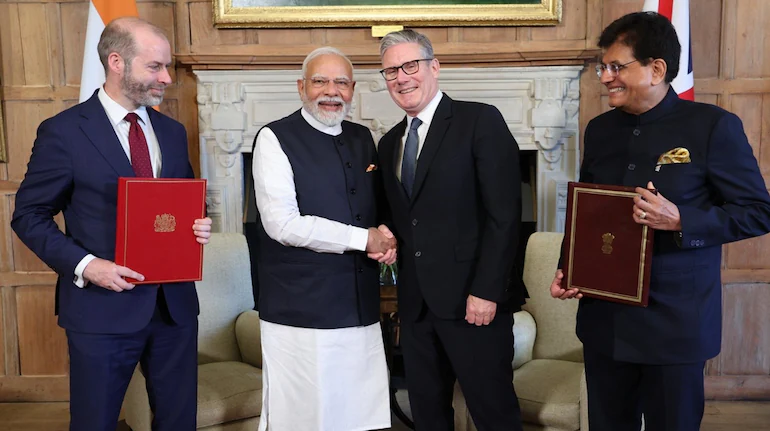
India and the UK’s landmark Comprehensive Economic and Trade Agreement (CETA) officially came into force today, July 15, 2026, unlocking duty‑free access for nearly 99% of Indian exports to the UK and slashing tariffs on British goods like whisky, gin, chocolates, and premium automobiles. This is India’s biggest bilateral trade deal in recent years and the UK’s largest since Brexit.
📜 Background & Significance
- Signed in London on July 24, 2025 after 14 rounds of negotiations.
- Witnessed by PM Narendra Modi and UK’s then PM Keir Starmer.
- Effective from July 15, 2026, alongside the Double Contribution Convention (social security pact).
- Marks India’s sixth major FTA under the Modi government, after deals with Mauritius, UAE, Australia, EFTA, and Oman.
🌟 What India Gains
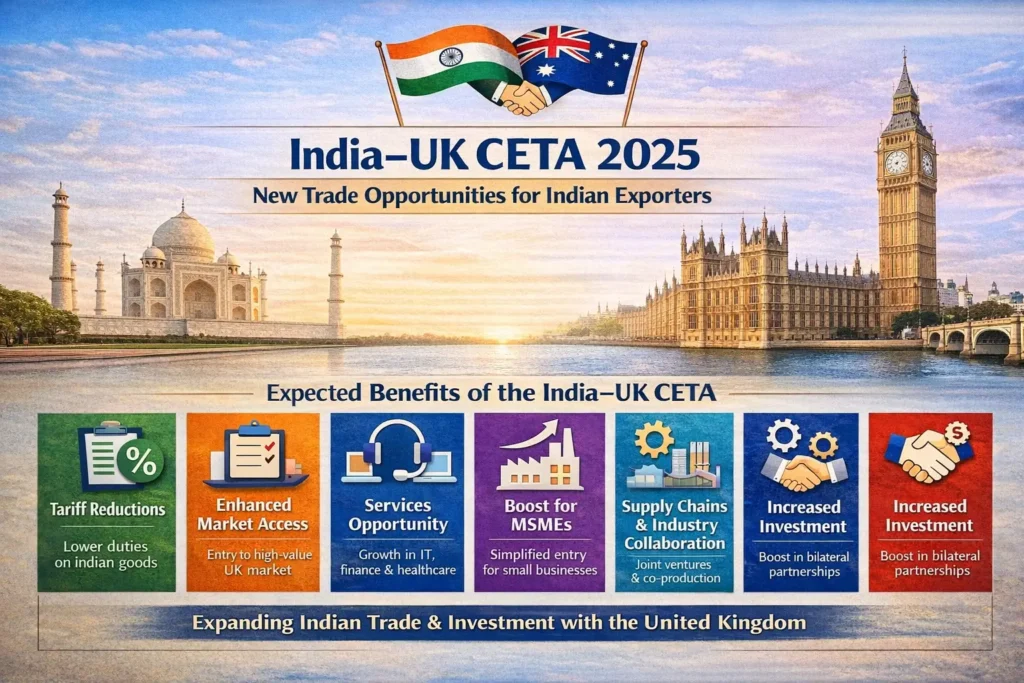
- Zero‑duty access for 99% of exports: textiles, garments, footwear, carpets, processed food, cereals, vegetables, fruits, spices, fish, meat, engineering goods, pharmaceuticals, gems, and jewellery.
- Boost for labour‑intensive industries employing millions across India.
- Services sector expansion: IT/ITES, education, professional services, and healthcare providers gain easier UK market entry.
- Social security relief: Indian professionals working temporarily in the UK avoid double contributions for up to 5 years.
🇬🇧 What the UK Gains
- Tariff reductions on premium goods:
- Whisky duty cut from 150% → 75% immediately, to 40% by year 10.
- Gin, chocolates, biscuits, cosmetics, perfumes, and luxury cars see phased reductions.
- Automobile sector breakthrough: India agreed to reduce duties on fully built UK cars and trucks—first time in any FTA.
- Silver imports: Tariffs cut to zero within 10 years.
📊 Economic Impact
- Bilateral trade already at $25 billion in 2025–26, expected to double to $100 billion by 2030.
- Indian exports gain competitiveness in the UK market, while British goods become more affordable in India.
- Supply chains strengthened, encouraging innovation, investment, and job creation.
🧾 Key Features Beyond Tariffs
- Digital trade & telecom: Frameworks for secure cross‑border data flows.
- Financial services: Easier access for banks and fintech firms.
- Government procurement: UK firms can bid for Indian contracts.
- Sustainability & labour: Commitments on environment, gender equality, and fair competition.
⚠️ Risks & Challenges
- Sensitive sectors excluded: Dairy, cereals, millets, edible oils, apples, and some vegetables remain protected.
- Inflationary pressures: Cheaper imports could challenge local producers.
- Implementation hurdles: Ensuring compliance across 30 chapters covering goods, services, IP, and transparency.
✍️ Conclusion
The India–UK CETA is not just a trade pact—it’s a strategic corridor linking South Asia and Europe. For India, it promises jobs, exports, and global competitiveness. For the UK, it’s a post‑Brexit lifeline to a fast‑growing market.
As tariffs fall and markets open, the deal symbolizes a new era of economic diplomacy, where commerce is not merely about goods but about people, services, and shared prosperity.