


Every August 15, India stops to remember a moment that reshaped the lives of millions. In 1947, after centuries of colonial rule and decades of mass struggle, British authority in most of the subcontinent ended and a new nation was born. Independence Day is more than a date; it is an annual act of memory and renewal that connects history with present-day hopes. For readers across generations, it’s a day to honor sacrifice, reflect on progress, and recommit to the work of building a more inclusive, prosperous India.
The road to August 15, 1947 was long and varied. Nationalist movements combined mass politics, legal resistance, and social reform. Leaders such as Mahatma Gandhi championed non-violent civil disobedience, while figures like Subhas Chandra Bose advocated more militant approaches. Jawaharlal Nehru’s vision of a secular, democratic republic shaped the institutional architecture that followed independence. At the same time, countless unsung local leaders, activists, and ordinary citizens carried the movement forward through strikes, boycotts, and community organizing. The day of independence brought jubilation, but it also brought the trauma of partition: communal violence and mass displacement that left deep scars and shaped the subcontinent’s politics for decades.
Why the day still matters
Independence Day acts as a unifying ritual in a country defined by immense linguistic, cultural, and regional diversity. The flag-hoisting ceremony, the playing of the national anthem, and the Prime Minister’s address from the Red Fort serve as national anchors. But the day is also a mirror: it asks citizens to measure how far the nation has come—and how far it still needs to go. The celebrations reaffirm democratic values, spotlight development achievements, and prompt debates about social justice, economic inclusion, and civil liberties. In a globalized world, August 15 is also an opportunity for India to present its evolving role on the world stage—from a post-colonial state to a major player in technology, climate diplomacy, and regional security.
Traditions and rituals
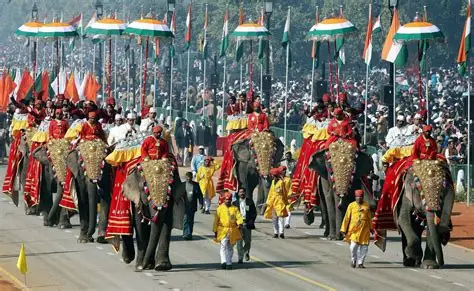
Independence Day blends formal ceremonies with grassroots customs. At the national level, the Prime Minister hoists the Tricolor at the Red Fort in Delhi and delivers a speech outlining achievements and priorities. State capitals and municipal bodies replicate this ritual, often accompanied by parades, marching contingents, and cultural performances. Schools and colleges organize patriotic programs—speeches, dances, and plays—that educate younger generations about freedom fighters and historical milestones. Streets and homes are decorated with the saffron, white, and green of the flag. Increasingly, social media amplifies local celebrations, turning neighborhood processions and personal stories into shareable moments that reach a global Indian diaspora.
Symbols that endure
The Indian flag is a compact statement of values: saffron for courage and sacrifice, white for peace and truth, green for faith and fertility, and the Ashoka Chakra to represent law and progress. Nehru’s “tryst with destiny” speech, delivered on the eve of independence, remains an iconic articulation of national aspiration. The Red Fort has become a symbolic stage where leaders communicate with the nation, and every year’s speech is scrutinized by citizens and commentators alike for its policy signals. At the same time, smaller, local memories—burial grounds, memorials, old letters, and oral histories—keep alive the human dimension of independence stories that official narratives can sometimes miss.
Contemporary themes to explore
For a modern audience, Independence Day is a chance to connect historical memory with contemporary issues. India’s demographic edge—nearly half the population is under 30—makes youth empowerment a recurring theme. Spotlighting youth entrepreneurs, climate activists, and civic-tech innovators resonates with readers looking for forward-focused content. Economic transformation also offers rich material: stories about India’s digital adoption, startup growth, and infrastructure projects show progress but can be balanced with reporting on regional disparities and the challenges of inclusive development. Social justice remains central: progress on caste equity, women’s empowerment, and minority rights should be assessed honestly, acknowledging gains while naming unresolved problems.
Human stories that stick
Stories sell, and Independence Day articles that humanize history tend to perform well. A short vignette—children marching down a lane with handmade flags, an elderly freedom fighter smiling at a neighborhood ceremony, or a local school’s annual play—creates emotional connection. Localized reporting from West Bengal, for example, can highlight how the day is observed differently in urban Kolkata versus rural districts: how traditions, foods, and public conversations reflect regional histories. These personal touches make the national story relatable to readers and improve engagement.
SEO and publishing tips
Choose headlines that combine intent with timeliness, such as “India Independence Day 2026: History, Traditions, and What’s Next” or “August 15: Remembering India’s Journey From 1947 to Today.” Use a concise meta description that includes “India Independence Day” and an action phrase (about 120–150 characters). Target keywords: India Independence Day, August 15, Indian freedom movement, Tricolor celebrations, Red Fort speech, Independence Day traditions. Include internal links to related posts—biographies of freedom fighters, regional histories, or recent policy analyses—to improve dwell time and SEO. Add images with descriptive alt text (e.g., “Flag hoisting at Red Fort on Independence Day”), and consider embedding short videos or archival photos to increase social shares.
Handling sensitive topics
Independence Day coverage sometimes touches contested memories—partition, communal violence, or partisan uses of national symbols. Maintain a balanced, empathetic tone: acknowledge trauma without inflaming tensions, present multiple scholarly perspectives where appropriate, and avoid partisan language. When discussing policy issues, back claims with reputable sources and clear data.
Call to action
End articles with an invitation: ask readers to share their family Independence Day memories, submit photos of local celebrations, or support a nearby veterans’ or memorial project. Engagement helps build community and drives comments and shares.
Conclusion
Independence Day is a layered moment—celebration, commemoration, and call to action. It reaffirms a shared history while opening conversation about the future. Each August 15, citizens renew not only a pledge to independence but a commitment to make that independence meaningful in everyday life: stronger institutions, greater equality, and broader opportunity. Remembering the past matters because it frames how we imagine and build the tomorrow we want.
About The Author