



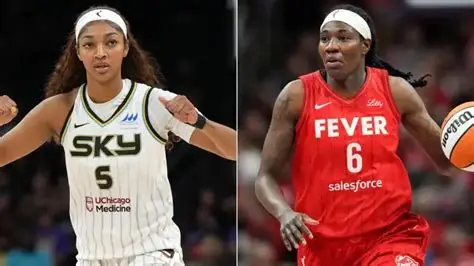
Sports commentator Jason Whitlock has sparked debate after reacting strongly to comments by Indiana Fever head coach Stephanie White following a controversial foul involving DiJonai Carrington and Sophie Cunningham. Whitlock suggested that White should be dismissed, arguing that the coach appeared to defend Carrington instead of condemning the physical play.
Controversial moment draws attention
The incident involving Carrington and Cunningham quickly became a talking point among WNBA fans. The foul was viewed by some observers as overly aggressive, while others considered it part of the physical nature of professional basketball.
The debate intensified because Cunningham’s reaction and the nature of the contact prompted questions about player safety, officiating and the level of physicality allowed during games.
Whitlock voices strong criticism
Whitlock reacted angrily to the controversy and reportedly argued that Stephanie White “must be fired.” His criticism appeared to center on the belief that White’s comments were too supportive of Carrington and did not sufficiently acknowledge concerns surrounding Cunningham.
Whitlock’s response reflects a wider disagreement among fans and commentators about how coaches should handle controversial incidents involving their players. Some believe coaches should publicly defend their team, while others expect them to clearly condemn dangerous or unnecessary contact.
Stephanie White’s response
White’s comments were interpreted by some critics as a defense of Carrington. The coach appeared to place the incident within the broader context of competitive basketball and the physical demands of the league.
However, supporters of White argue that acknowledging the intensity of the game does not necessarily mean approving every foul. They say a coach can support a player while still encouraging greater discipline and respect on the court.
Carrington and Cunningham at the center
DiJonai Carrington has built a reputation as a tough and energetic competitor. Her defensive intensity is an important part of her game, but it has also made her involved in several physical exchanges that attract attention.
Sophie Cunningham is likewise known for her competitive style and willingness to play aggressively. The clash between the two players therefore became more than a single foul—it became part of a larger discussion about the boundaries of physical basketball.
Why the incident matters
The controversy highlights several ongoing issues in women’s basketball:
- How much physical contact should be allowed during play?
- When does aggressive defense become dangerous?
- Should coaches publicly criticize their players after controversial fouls?
- Are officials applying rules consistently?
- How should leagues protect players while preserving the competitive nature of the sport?
These questions have become increasingly important as the WNBA continues to attract larger audiences and greater media attention.
Fans divided over Whitlock’s comments
Fans have expressed sharply different opinions about the controversy. Some agree with Whitlock and believe White should have taken a firmer position against the foul. They argue that coaches have a responsibility to protect players and maintain accountability.
Others consider Whitlock’s demand for White’s dismissal excessive. They believe one disputed play or postgame comment should not determine a coach’s future, particularly when the incident occurred in a highly competitive game.
The larger WNBA conversation
The dispute also reflects the growing scrutiny surrounding the WNBA. High-profile matchups, intense rivalries and increased media coverage mean that controversial plays now receive immediate national attention.
As the league grows, coaches, players and officials will face continued pressure to balance physical competition with player safety. Incidents such as this one can influence how fans view teams, players and league standards.
Conclusion
Jason Whitlock’s criticism of Stephanie White has added another layer to the debate surrounding the foul involving DiJonai Carrington and Sophie Cunningham. While Whitlock believes White’s response justified calls for her dismissal, others see the incident as a contentious basketball moment rather than evidence of coaching failure. The controversy ultimately raises important questions about accountability, physicality and player safety in the WNBA.
About The Author


