



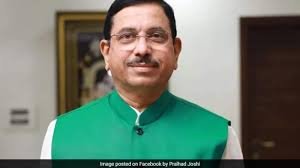
India’s political spotlight has shifted once again after Pralhad Joshi was appointed to take charge of the Education Ministry following Dharmendra Pradhan’s resignation. The change comes at a sensitive moment, with the government facing pressure over the NEET controversy and student protests that had been building for weeks. For many observers, this is not just a routine cabinet adjustment but a signal that the Centre wants to stabilize the situation quickly.
The announcement has drawn immediate attention because the Education Ministry is at the center of one of the most discussed public issues in the country right now. With Pradhan stepping down and Joshi stepping in, the government is trying to reset the conversation while addressing the anger that triggered the crisis in the first place.
Why the Change Happened
Dharmendra Pradhan resigned after weeks of student-led protests over alleged irregularities in the NEET-UG examination and the wider paper leak controversy. Protesters had been demanding accountability, and the resignation of the Education Minister became one of their key conditions for continuing talks. His exit was therefore seen as a major political concession in response to sustained public pressure.
According to reports, Pradhan said in his resignation message that he did not want students to get trapped in legal and political uncertainty. That framing made the resignation look like an effort to protect the interests of young aspirants rather than simply a political retreat. Still, the move reflects how seriously the government is treating the fallout from the NEET row.
Who Is Pralhad Joshi
Pralhad Joshi is already a senior Union Minister, and he now takes on additional responsibility for the Education Ministry. At present, he handles Consumer Affairs, Food and Public Distribution, and New and Renewable Energy. His new role places him at the center of a ministry that is under intense public scrutiny.
The appointment is important because Joshi is seen as an experienced political administrator with a long track record in government. The Centre appears to be relying on that experience to manage the immediate crisis and keep the ministry functioning without disruption. In a moment of uncertainty, the government has chosen continuity with a senior leader already inside the cabinet.
What This Means For Students
For students, the biggest question is whether this change will lead to real action or just a symbolic reset. The NEET controversy has already caused anxiety among aspirants, parents, and coaching institutions, and many want clear answers about exam security and fairness. A new minister may help calm the political atmosphere, but it will not automatically solve the deeper structural issues.
That is why the focus now shifts to what Joshi does next. If the ministry moves quickly on transparency, investigation, and reforms, the appointment could be seen as a positive step. If not, the protests may continue in a new form, because the anger driving them has not gone away.
Political Significance
This appointment is significant because ministerial changes at this level often indicate a government trying to contain a major issue before it spreads further. The Education Ministry has become politically sensitive due to the scale of the protests and the public concern around exams. By placing Joshi in charge, the government is signaling that the matter is now being handled with senior-level attention.
At the same time, the change also shows how much pressure the Centre has been facing. Pradhan’s resignation was not just a personal decision; it was the result of sustained protest movement pressure and a breakdown in trust. The new appointment is therefore part of a broader effort to restore confidence and move the story away from crisis management.
Reactions And Expectations
Reports suggest that the move has been widely noticed across political and media circles because it happened so quickly after Pradhan’s resignation. The speed of the appointment indicates that the government wanted to avoid any vacuum in the Education Ministry. It also suggests that the Centre understands how sensitive the issue has become in public discourse.
The expectation now is that Joshi will bring stability, clearer communication, and a more controlled response to the ongoing fallout. That means addressing the concerns of students, responding to protest demands where possible, and ensuring that exam-related policy does not remain in limbo. His role will likely be judged not by the title alone, but by the speed and seriousness of the next decisions.
What Happens Next
The next few days will be crucial for the government and for the protest movement. If Joshi is able to present a credible plan for reform and transparency, the administration may recover some political ground. But if the response appears cosmetic, then the protests and criticism may continue.
This story is also likely to shape broader conversations about accountability in India’s examination system. The NEET row has already shown how quickly student grievances can become national political issues. With Joshi now in charge, the pressure is on the government to prove that the change is not just administrative, but meaningful.
Conclusion
Pralhad Joshi’s appointment as Education Minister marks an important moment in the government’s response to the Dharmendra Pradhan resignation. It is both a political move and a crisis-management step, designed to bring stability after weeks of protests and public anger. Whether it succeeds will depend on how quickly the new minister can turn this transition into real reform.
For now, the message is clear: the government wants the Education Ministry to move forward under fresh leadership while the country watches for answers on the NEET controversy.
About The Author