



T-Mobile customers across the U.S. were hit by a major service disruption on July 27, 2026, leaving many unable to make calls, send texts, or access mobile data. For some users, phones briefly dropped into SOS-only mode, turning an ordinary afternoon into a frustrating communications blackout.
The outage drew widespread attention because it appeared to affect users in multiple states at the same time, suggesting a network-side issue rather than isolated device trouble. While T-Mobile has been working to restore service, the incident raised familiar questions: what caused it, how widespread was it, and what should customers do when their phones suddenly stop working?
What Happened During the Outage
The first signs of trouble emerged when thousands of customers began reporting problems with T-Mobile service. Complaints quickly spread across outage-tracking platforms and social media, with users describing a mix of total signal loss, failed calls, delayed texts, and weak or unstable data connections.
What made the disruption especially noticeable was the speed and scale of the reports. Instead of a single local outage affecting one neighborhood or city, the issue appeared to span multiple regions in the United States. That broader pattern made it clear this was not just a simple coverage dead zone or a phone-specific problem.
Many users said their devices showed “No Service” or switched to emergency-only mode, which is often a sign that the handset cannot connect properly to the carrier network. In practical terms, that meant people who rely on mobile phones for work, travel, family communication, and two-factor authentication were suddenly cut off.
How Widespread Was It?
The outage was significant enough to trigger a surge in user reports across the country. Depending on the tracking source, the number of complaints rose sharply, with figures reaching tens of thousands and, in some reports, well beyond that during the peak of the incident.
Reports came in from a wide range of states, including Arizona, California, Georgia, and Utah, though the disruption was not necessarily limited to those areas. The geographic spread suggested a large-scale network problem rather than a local tower failure or an issue affecting just one metro area.
That matters because carrier outages often present differently from ordinary service problems. If one tower goes down, users in one small area may notice issues. But when reports come from multiple states and many different cities, it usually points to a wider technical fault somewhere in the network backbone.
What Users Experienced
The most common complaint was simple: people could not get their phones to work the way they normally do. Voice calls would not connect, text messages stalled, and data service became unreliable or disappeared completely.
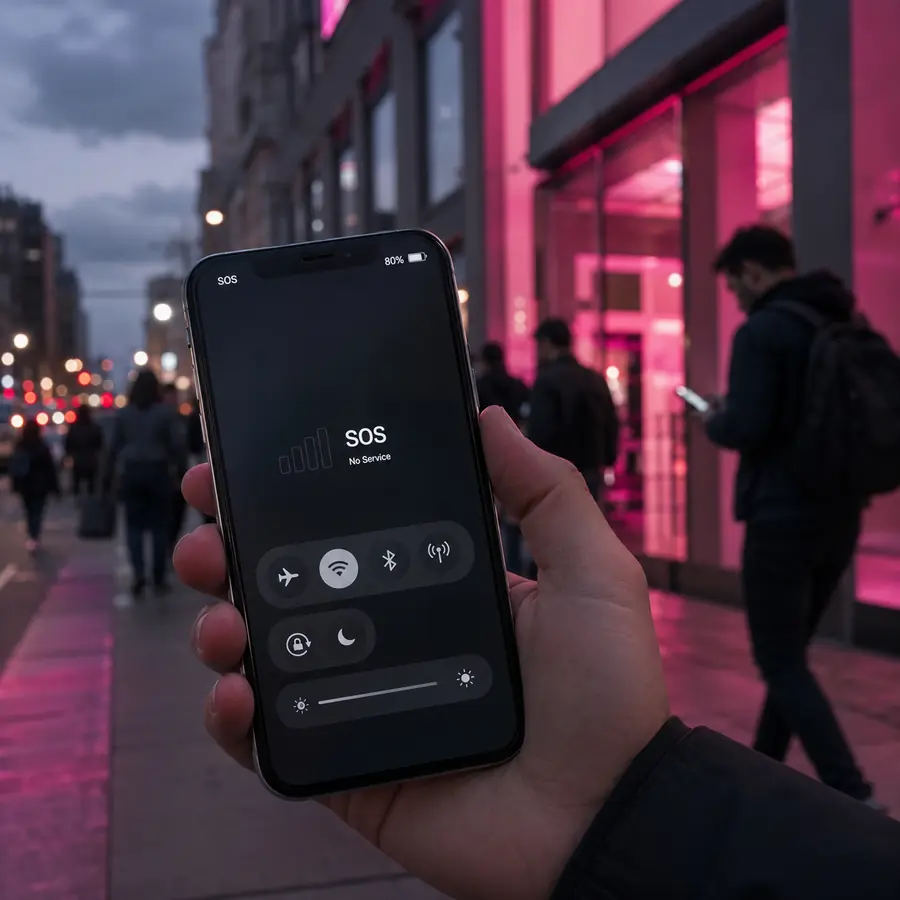
Some users reported that their phones remained technically connected to the network but still could not complete basic actions. Others saw their devices fall back into SOS mode, a frustrating sign that the phone was only able to make emergency calls rather than access normal service.
The outage also likely had a ripple effect beyond direct T-Mobile customers. Some mobile virtual network operators, or MVNOs, that rely on T-Mobile’s infrastructure may have experienced issues too. When the parent network goes down, partner brands using the same backbone can feel the impact almost immediately.
For many users, the disruption was more than an inconvenience. It affected work meetings, deliveries, banking apps, and login verification codes. In a mobile-first environment, even a short outage can interrupt daily routines in ways that are hard to ignore.
What Caused It?
As of the latest reports, T-Mobile had not released a detailed public explanation for the outage. That means the exact root cause remains unconfirmed for now.
In large carrier incidents like this, several possibilities are usually considered. The issue could involve a network software failure, a routing problem, an internal equipment malfunction, or a third-party infrastructure disruption. Sometimes the cause turns out to be a fiber interruption or a broader back-end systems issue affecting multiple services at once.
Until the company issues a full post-incident explanation, it is best to avoid assuming the outage came from any one source. Early speculation is common during network disruptions, but official confirmation usually comes only after engineers finish diagnosing the problem.
What T-Mobile Customers Should Do
If your service is affected during a carrier outage, the first step is to stay calm and confirm whether the problem is widespread. If many other users are reporting the same issue, the odds are high that the outage is on the carrier’s side rather than your device’s.
There are still a few steps worth trying while waiting for service to return:
- Restart your phone.
- Toggle airplane mode on and off.
- Make sure Wi-Fi is available, and enable Wi-Fi Calling if your phone supports it.
- Check whether the issue persists in a different location.
- Look for official updates from the carrier.
These actions will not fix a network-wide outage, but they can help rule out a local device issue. If your phone is still unable to connect after the outage is restored, then it may be worth checking SIM settings, restarting again, or contacting support.
If you are in an area where emergency connectivity is critical, using Wi-Fi as a backup can be a smart temporary workaround. Messaging apps, internet calling services, and email may still work even when traditional mobile service is unavailable.
What Happens Next
As service returns, the focus will shift from disruption to accountability. Customers will want a clear explanation, a timeline of the outage, and reassurance that similar failures are being addressed behind the scenes.
In major carrier outages, providers often release a formal statement after engineers finish investigating. That explanation can include technical details, restoration steps, and any preventive measures planned for the future. For users, those details matter because they help distinguish a one-off technical failure from a recurring reliability problem.
For now, the immediate concern is simple: getting service back to normal and making sure customers know whether they need to do anything on their end. In most cases, once the carrier restores the network, phones begin working again without any special action required.
Closing View
The July 2026 T-Mobile outage was a reminder that even the biggest mobile networks can experience sudden, widespread failures. With thousands of users affected across multiple states, the incident disrupted calls, texts, and data for a large number of customers and left many phones stuck in SOS mode.
While the exact cause has not yet been publicly confirmed, the pattern of reports points to a major carrier-side issue rather than a problem with individual devices. For users, the best response is to wait for official updates, use Wi-Fi when possible, and follow basic troubleshooting steps until full service is restored.
About The Author