



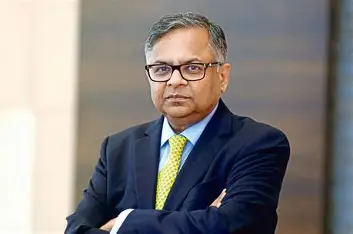
N Chandrasekaran’s decision not to seek reappointment as chairman of Tata Sons has triggered a major leadership transition at the top of one of India’s most powerful business groups. He will continue in the role until February 20, 2027, but his exit plan has already shifted attention to succession and the future direction of the Tata Group.
The development ends weeks of uncertainty over whether Chandrasekaran would return for another term. It also comes at a critical time for Tata Sons, which oversees a vast portfolio of companies across technology, automobiles, aviation, steel, energy, and consumer businesses.
A major corporate transition
Chandrasekaran has been one of the most visible and influential corporate leaders in India over the past decade. His tenure at Tata Sons has been closely tied to the group’s expansion into new-age sectors, digital transformation, and a broader push toward future-facing businesses.
His decision to step away from reappointment means Tata Sons now has to manage a carefully planned transition. For a company of this size, leadership continuity matters not only for internal stability but also for investors, employees, and business partners who watch every move at the top.
Why the announcement matters
Tata Sons is the holding company of the Tata Group, which has interests in some of India’s most important industries. Any leadership change at this level is significant because the chairman plays a central role in shaping strategy, appointing senior executives, and guiding long-term growth.
Chandrasekaran’s exit is particularly notable because the group is in the middle of major expansion plans. Tata has been building a stronger presence in semiconductors, batteries, aviation, electronics, and digital services, all of which demand steady leadership and long-term decision-making.
For that reason, the news is being seen as more than a routine corporate update. It marks the beginning of a larger transition that could influence Tata’s strategic direction for years.
What led to the move
Reports suggest there had already been some uncertainty around Chandrasekaran’s reappointment. A proposed extension reportedly did not receive unanimous support at the board level earlier this year, creating a delay in the process. That left the company in a prolonged period of speculation over whether he would continue beyond his current term.
In that context, his decision to not seek another term has now brought clarity. It also suggests that the board and leadership team may have preferred to avoid a longer phase of uncertainty by setting a definite timeline for succession.
The move may be viewed as a practical decision aimed at ensuring Tata Sons has enough time to identify and prepare the next chairman before the transition becomes official.
Chandrasekaran’s legacy at Tata
Chandrasekaran’s leadership has been marked by expansion, discipline, and a stronger push toward modernization. Since taking charge, he has helped steer Tata Group deeper into high-growth sectors while maintaining the company’s traditional focus on scale and operational excellence.
Under his watch, Tata has increased its presence in industries that are expected to define the next phase of India’s economic growth. This includes major investments in digital businesses, manufacturing, advanced technology, and emerging mobility solutions.
He is widely credited with giving the group a sharper corporate identity at a time when Indian industry is becoming more globally competitive. His tenure will likely be remembered as a period when Tata moved with greater confidence into future-oriented sectors.
The succession challenge
Now the attention shifts to who will take over next. Tata Sons is expected to begin a structured succession process, and that decision will be watched closely by the business community. The next chairman will inherit a company with enormous scale and equally high expectations.
The challenge will be to continue Tata’s expansion without losing the stability and credibility built during Chandrasekaran’s term. That means the choice of successor will matter not just for internal leadership, but also for the group’s image in the market and among investors.
A smooth transition will be essential. Any delay or disagreement could create uncertainty at a time when the group is focused on long-term investments and strategic growth.
What to watch next
The key question now is how quickly Tata Sons finalizes its succession plan. The company has time before February 2027, but the process will likely begin much earlier. A clear announcement will help remove uncertainty and reassure stakeholders that the transition is being handled in an orderly way.
Observers will also be watching whether the next chairman comes from inside the Tata ecosystem or represents a fresh leadership direction. Either way, the appointment will be one of the most closely followed corporate developments in India.
Closing note
N Chandrasekaran’s decision to step away from reappointment marks the end of a significant chapter in Tata Sons’ recent history. While he remains in place until February 20, 2027, the focus has clearly moved to succession and the future of the Tata Group.
For India’s corporate world, this is not just a leadership change. It is the beginning of a new phase for one of the country’s most respected business institutions.
About The Author