



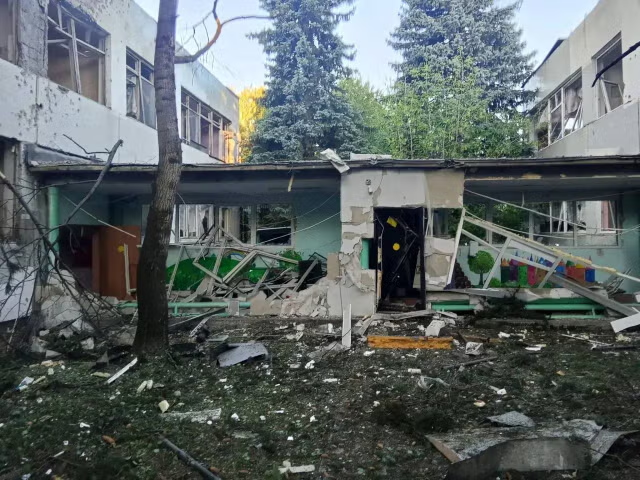
The Russia-Ukraine war has entered yet another intense phase as Ukraine launched one of its most significant long-range drone offensives against Russian territory. The attacks, which reportedly targeted military infrastructure, industrial facilities, and logistics hubs deep inside Russia, demonstrate how modern warfare has evolved beyond traditional battlefields.
While fierce fighting continues along the front lines in eastern and southern Ukraine, both nations are increasingly relying on advanced drone technology to strike strategic targets hundreds of kilometers away. These developments not only impact the course of the war but also have far-reaching consequences for global security, energy markets, and international diplomacy.
Ukraine Launches Large-Scale Drone Strikes
In the early hours of July 18, Ukraine reportedly launched hundreds of drones toward several regions across Russia. According to Russian officials, air defense systems intercepted many of the incoming drones, but some managed to reach their intended targets.
The strikes reportedly affected several military-linked and industrial locations, including:
- Logistics centers supplying Russian armed forces.
- Oil storage and fuel facilities.
- Industrial complexes believed to support defense production.
- Infrastructure connected to military transportation and communications.
Russian authorities confirmed damage in multiple regions and reported casualties, while emergency services were deployed to extinguish fires and secure affected areas.
Ukraine has not publicly disclosed operational details but stated that the attacks were aimed at weakening Russia’s military capabilities rather than targeting civilians.
Why Is Ukraine Attacking Targets Inside Russia?
Since the beginning of the war in 2022, Ukraine primarily focused on defending its own territory. However, over the past four years, Kyiv has significantly expanded its strategy by carrying out long-range strikes inside Russia.
Military experts believe Ukraine has several objectives:
1. Disrupt Military Logistics
Modern armies rely heavily on supply chains. By targeting warehouses, fuel depots, and transportation hubs, Ukraine hopes to slow Russia’s ability to move troops, weapons, and ammunition to the front lines.
2. Damage Defense Production
Several reported targets are believed to support Russia’s military-industrial complex. Damaging factories or industrial facilities can reduce the production of missiles, drones, and military equipment.
3. Increase Pressure on Russia
The attacks also send a strategic message that no region is completely beyond Ukraine’s reach. This forces Russia to allocate additional resources to homeland air defense instead of the battlefield.
4. Demonstrate Technological Advancement
Ukraine has rapidly developed advanced long-range drones capable of traveling hundreds of kilometers with remarkable precision. These operations showcase Kyiv’s growing technological capabilities despite facing a much larger military.
Russia Responds
Russia stated that its air defense systems intercepted a large number of Ukrainian drones before they could reach their targets.
Following the attacks:
- Emergency response teams were dispatched to damaged areas.
- Investigations were launched into the affected facilities.
- Security measures were strengthened around critical infrastructure.
- Russian forces continued missile and drone attacks against Ukrainian cities in what analysts describe as a continuing cycle of retaliation.
Russian officials accused Ukraine of attempting to spread fear among civilians, while Ukrainian officials argued that the strikes were directed at military-related infrastructure supporting Russia’s war effort.
Drone Warfare Is Changing Modern Conflict
One of the biggest lessons from the Russia-Ukraine war has been the growing importance of drones.
Unlike traditional fighter jets or missiles, drones are:
- Relatively inexpensive.
- Difficult to detect.
- Capable of traveling long distances.
- Highly effective for surveillance and precision strikes.
Ukraine has invested heavily in developing domestically produced drones capable of carrying out long-range missions. Russia has also expanded its own drone program, leading to an unprecedented “drone versus drone” conflict.
Military analysts believe this war will influence how future conflicts are fought across the world.
The Human Cost Continues to Rise
While military operations dominate headlines, the human impact of the conflict remains severe.
Millions of people have been displaced since the war began. Thousands of civilians have lost their lives, while homes, schools, hospitals, and essential infrastructure have suffered extensive damage.
Communities on both sides continue to face air raid alerts, disruptions to daily life, and economic hardship. Humanitarian organizations have repeatedly called for greater protection of civilians and increased international support for those affected by the conflict.
Global Reactions
The latest attacks have drawn close attention from governments around the world.
Western nations continue to monitor the situation while reaffirming support for Ukraine. At the same time, many international leaders have urged both sides to avoid further escalation that could increase regional instability.
The United Nations and several humanitarian organizations have once again emphasized the need to protect civilian lives and seek diplomatic solutions wherever possible.
Economic and Global Impact
The conflict continues to affect the global economy in several ways.
Energy Markets
Any attack on oil storage facilities or energy infrastructure raises concerns about potential disruptions in global energy supplies, which can influence oil prices worldwide.
International Trade
The Black Sea remains a critical route for grain exports. Continued military activity in the region creates uncertainty for global food supplies and shipping.
Defense Spending
Many European countries have increased military budgets, invested in advanced air defense systems, and accelerated drone development programs.
Technology Race
The conflict has become a testing ground for next-generation military technologies, including artificial intelligence, autonomous drones, and electronic warfare systems.
What Could Happen Next?
Military analysts believe both Russia and Ukraine are likely to continue long-range drone operations in the coming months.
Possible developments include:
- Increased drone attacks on strategic infrastructure.
- Greater use of artificial intelligence in military operations.
- Enhanced air defense systems by both countries.
- Continued fighting along key front lines.
- Ongoing international diplomatic efforts, although prospects for immediate peace remain uncertain.
As each side adapts its military strategy, the conflict is becoming increasingly focused on technology, industrial capacity, and endurance rather than large territorial advances alone.
Conclusion
Ukraine’s latest drone offensive highlights how the nature of modern warfare has transformed. By striking military-related infrastructure deep inside Russia, Ukraine aims to weaken logistical support, disrupt defense production, and demonstrate its expanding long-range capabilities. Russia, meanwhile, continues to respond with its own missile and drone attacks, ensuring that the conflict remains highly dynamic and unpredictable.
More than four years after the full-scale invasion began, the Russia-Ukraine war continues to reshape global security, influence international politics, and drive rapid advancements in military technology. As the conflict evolves, the world watches closely, hoping for a future where diplomacy can eventually replace destruction.
About The Author


