


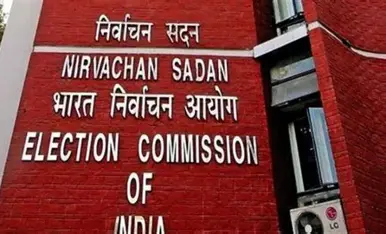
The Election Commission of India (ECI) has been making important headlines today, and the updates are relevant for every citizen who follows the democratic process closely. The Commission is not only responsible for conducting elections, but also for ensuring that the system remains fair, accurate, and trustworthy. Today’s developments highlight three major areas of focus: voter roll revision, coordination with state election bodies, and the fight against misinformation. Together, these updates show how much work goes on behind the scenes to keep India’s electoral system strong.
One of the biggest news items today is the start of Special Intensive Revision Phase-III across 16 states and three Union Territories. This step is significant because electoral rolls are the foundation of every election. Before anyone can vote, their name must be correctly listed in the voter register. If the list is incomplete, outdated, or inaccurate, it can lead to confusion and frustration for ordinary citizens. That is why revision of voter rolls is such an important task for the Election Commission.
The Special Intensive Revision process is meant to make the rolls cleaner, more accurate, and more reliable. It helps remove duplicate entries, update addresses, and include eligible voters who may have been left out earlier. In a country as large and diverse as India, this kind of administrative work is not easy, but it is absolutely necessary. A fair election begins long before the voting day, and one of the most important parts of that preparation is making sure the voter list is correct.
For citizens, this update is a reminder to check their voter details carefully. Many people assume that once their name is added to the rolls, it will always remain correct. But in reality, people move to new places, names may be misspelled, and records may need updates. When voter information is not checked regularly, problems can arise during elections. The ECI’s revision drive gives people a chance to ensure that their records are up to date and ready for use.
Another major development today is the national round table conference held by the ECI and State Election Commissioners in New Delhi. The meeting ended with a national declaration, which suggests that the Commission is working toward better coordination between the central and state election authorities. This is an important step because elections in India are not simple events. They involve huge numbers of voters, thousands of officials, and a very large administrative network spread across different regions.
Coordination between the Election Commission and state bodies matters because many election-related issues must be handled at the ground level. Voter verification, polling arrangements, roll management, and election day operations all depend on strong communication and planning. When the central and state institutions work together efficiently, the entire process becomes smoother. This kind of teamwork also helps reduce errors and delays.
The adoption of a national declaration at the end of the conference indicates that there is a shared commitment to improving election administration. It is a sign that the Commission is not working in isolation, but rather building a broader framework of cooperation across the country. In a democracy as large as India, this level of coordination is essential for maintaining trust and efficiency.
Today’s updates also include the publication of the final electoral rolls for Tamil Nadu. This is another key milestone in the election process. Once final rolls are published, they serve as the official record of eligible voters. That makes them especially important for both the Election Commission and the public. For voters, this is the time to check whether their name, address, and other details are correct. For the Commission, it marks the completion of an important stage in election preparation.
The publication of final rolls is not just a technical formality. It is part of the broader effort to ensure that elections are conducted on the basis of accurate and trusted records. If a voter discovers an error too late, it can cause unnecessary stress and inconvenience. That is why early verification is always better. The process helps prevent last-minute confusion and supports a more transparent election system.
Another issue that has drawn attention today is the Commission’s response to misinformation. Reports had circulated online claiming that e-voter rolls were removed from the Commission’s website, but the ECI dismissed those claims as fake news. This is an important development because misinformation about voter records can quickly create doubt and confusion. In the digital age, false claims can spread extremely fast, especially on social media platforms.
The ECI’s response shows that protecting trust in the electoral system now involves more than just organizing polls. It also requires active communication with the public and fast correction of false information. When voters hear misleading claims about voter lists or election procedures, they may become uncertain about whether their rights are secure. That is why quick clarification from the Commission is so important.
Misinformation can damage public confidence even when no real problem exists. If people start believing that voter rolls have been deleted or manipulated, the credibility of the entire system can suffer. By rejecting such claims publicly, the ECI is reinforcing the message that official records remain in place and that voters should rely only on verified information. This is an essential part of democratic governance in the modern era.
Taken together, today’s news shows that the Election Commission is working on both preparation and trust. On one side, it is updating electoral rolls, publishing final voter lists, and working with state authorities. On the other side, it is responding to fake news and trying to keep the public informed. These two efforts are closely linked, because a good election system must be both accurate and credible.
For ordinary voters, the message is clear. Stay informed through official sources, check your voter details regularly, and do not rely on unverified rumors. Elections are not only about choosing leaders; they are also about protecting the integrity of the democratic process. Every citizen has a role to play by ensuring that their own information is correct and by helping spread accurate information.
The ECI’s latest updates also remind us that election management is a continuous process, not something that begins only when voting is near. Long before ballots are cast, officials work on voter lists, administrative coordination, legal compliance, and public communication. These behind-the-scenes efforts may not always receive as much attention as election results, but they are the backbone of a healthy democracy.
In the end, today’s ECI news reflects a larger truth: fair elections depend on careful planning, accurate data, and public trust. The Commission’s work may often appear technical, but its impact is deeply democratic. Every updated voter roll, every coordination meeting, and every correction of misinformation contributes to a stronger electoral system.
As India moves forward with active election preparation, the role of the Election Commission becomes even more important. Its responsibility is not just to conduct elections, but to protect the process from errors, confusion, and falsehoods. Today’s developments show that the ECI is focused on exactly that mission — keeping Indian democracy accurate, transparent, and trustworthy.
About The Author


