

Introduction
The Strait of Hormuz, a slender maritime artery shimmering under the Gulf’s relentless sun, has once again become the epicenter of global turbulence. What began as precision strikes has now spiraled into a tempest of retaliation, rhetoric, and regional reverberations. The unfolding drama between Washington and Tehran is not just a clash of militaries—it is a collision of histories, ambitions, and fragile alliances.
The Third Night of Fire
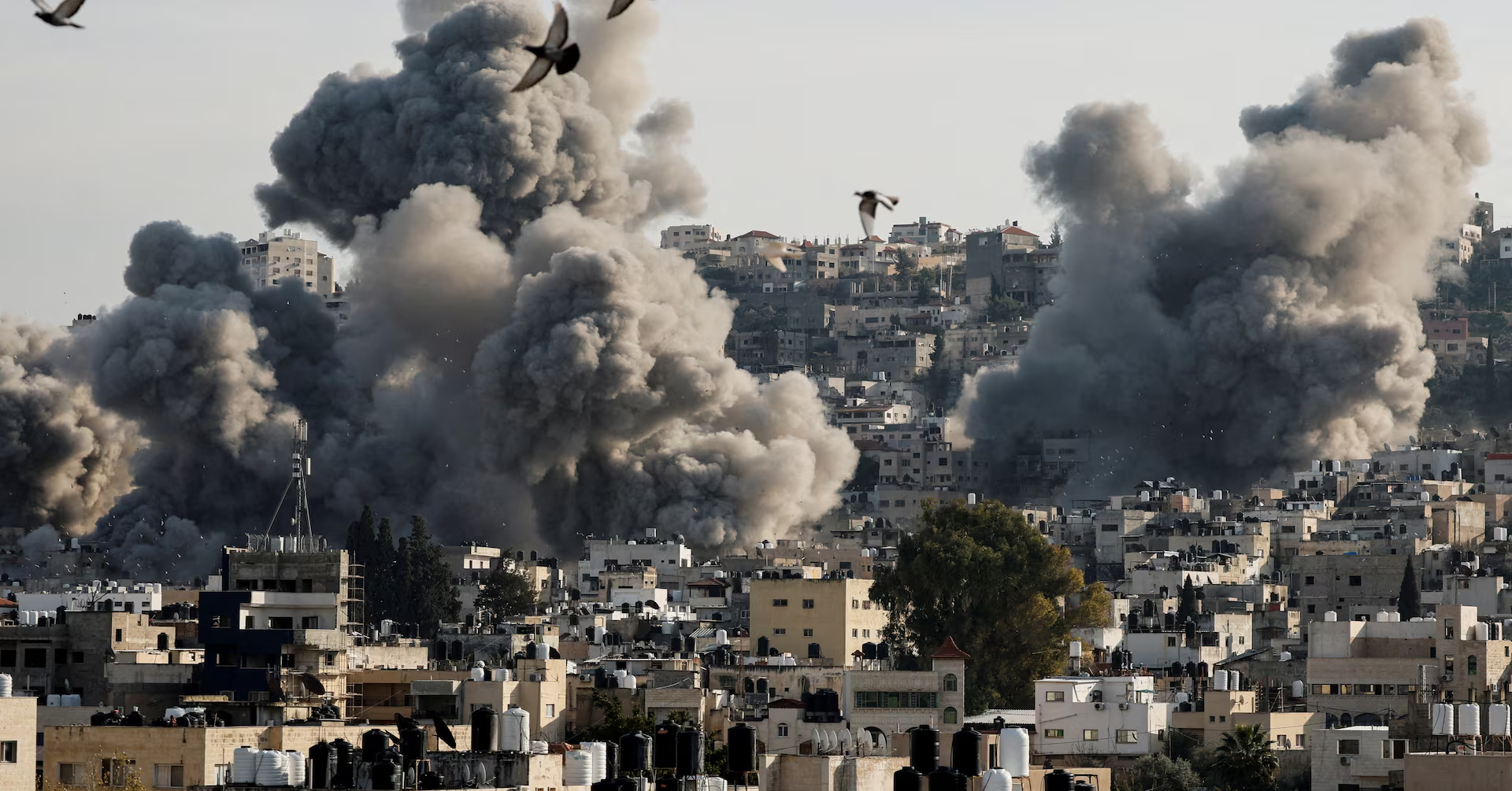
For the third consecutive night, U.S. forces unleashed a barrage of strikes across southern Iran, targeting missile batteries, drone sites, and coastal defenses. President Donald Trump declared the campaign was hitting Iran “very heavy tonight,” even as he insisted diplomacy remained possible. Yet Tehran’s response was immediate and incendiary: missiles streaked toward U.S. bases in Bahrain and Jordan, while tankers in the Strait of Hormuz became fiery silhouettes against the horizon.
Iran’s Defiance
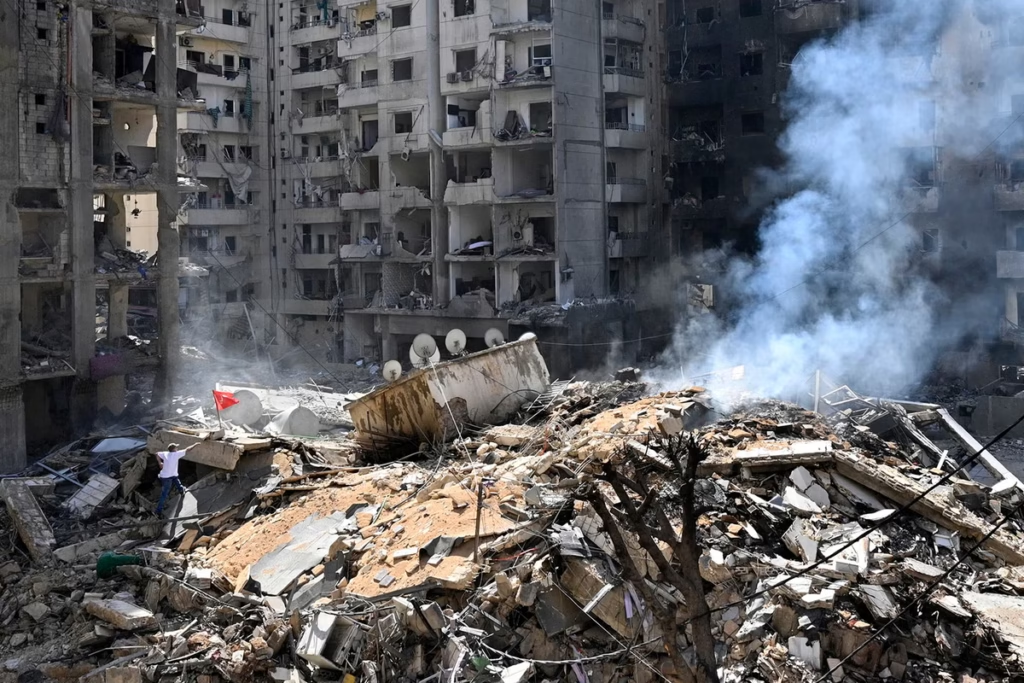
Iranian state media reported explosions in Bushehr, Bandar Abbas, Kish Island, and Jam, painting a grim tableau of a nation under siege. The Islamic Revolutionary Guard Corps (IRGC) claimed responsibility for attacks on U.S. military assets, including radar systems and fuel depots in Bahrain. Brigadier General Mohammad Akraminia vowed that Hormuz would not reopen “under war, evil, and American aggression.”
Regional Shockwaves
The conflict’s tremors are felt far beyond Iran’s borders:
- UAE tankers struck: One Indian sailor killed, several injured.
- Jordan intercepts missiles: Four Iranian projectiles shot down before reaching targets.
- Saudi Arabia & Houthis: Truce shattered as Riyadh bombed Sanaa International Airport.
- Lebanon & Israel: Talks in Rome attempt to contain Hezbollah’s involvement.
Oil Markets in Panic
Global oil prices surged nearly 10% in a single day, the sharpest spike since 2020. Brent crude climbed above $85 a barrel, while West Texas Intermediate breached $80. Analysts warn that prolonged hostilities could push prices into triple digits, igniting inflationary pressures worldwide. For energy-importing nations like India, the crisis is not a distant spectacle—it is a looming economic shock.
Diplomacy in the Shadows
Even amid the pyrotechnics of war, diplomacy flickers faintly. Oman’s foreign minister revealed negotiations to establish a framework for safe navigation through Hormuz. Yet Tehran rejected proposals that diluted its control, insisting only respect for Iranian sovereignty could reopen the strait. Meanwhile, India’s External Affairs Minister S. Jaishankar urged adherence to UNCLOS, highlighting the plight of seafarers caught in the crossfire.
Trump’s Toll Proposal: Guardian or Pirate?
In a move both audacious and controversial, Trump proposed a 20% toll on cargo ships transiting Hormuz, arguing the U.S. should be reimbursed for its protective role. Critics, including Brazil’s President Lula, branded the plan “piracy.” The International Maritime Organization condemned the idea, insisting freedom of navigation cannot be commodified. This gambit reframes the U.S. not just as guardian but as gatekeeper of global trade.
Human Cost Amid the Headlines
Behind every missile strike lies a human tragedy. Families mourn sailors lost at sea, Bahraini citizens shelter from sirens, and Iranian civilians endure explosions near their homes. The war’s narrative is not only geopolitical—it is profoundly human, etched in grief and resilience.
Conclusion: A World on Edge
The U.S.–Iran confrontation is more than a bilateral feud—it is a crucible where energy security, diplomacy, and human survival converge. Whether this inferno subsides into uneasy calm or escalates into wider war remains uncertain. What is clear is that the Strait of Hormuz, shimmering under its desert sun, will continue to cast long shadows across the world stage.